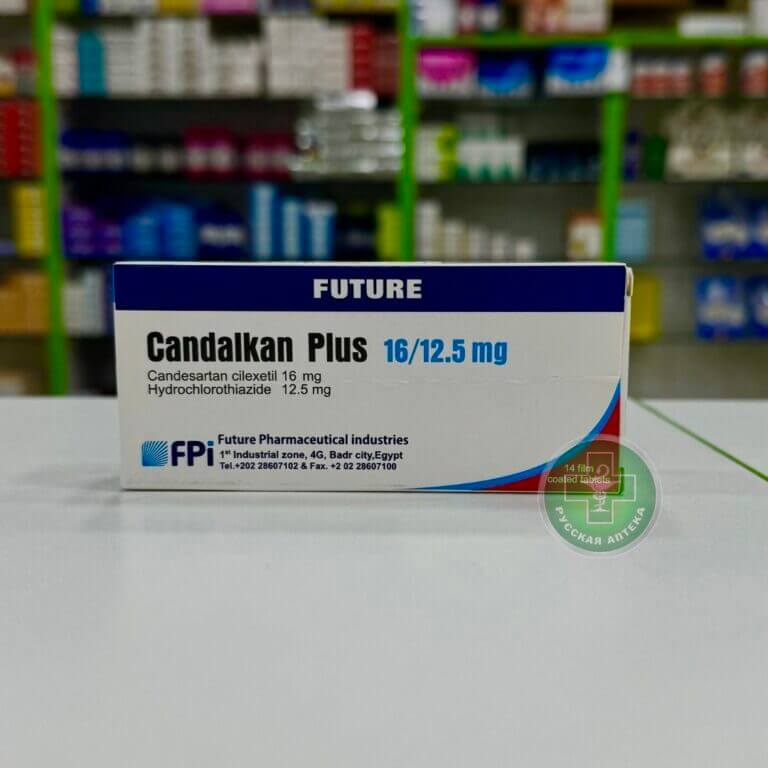
Candalkan Plus 16/12.5 mg 14 tablets
Composition:
Each p/o tablet contains:
Candesartan cilexetil 16mg
Hydrochlorothiazide – 12.5mg.
Inactive ingredients:
croscarmellose sodium, microcrystalline cellulose, iron oxide red, lactose monohydrate, magnesium stearate, starch.
Properties:
Combined antihypertensive drug. Candesartan and hydrochlorothiazide have a combined antihypertensive effect. In patients with arterial hypertension, Candalkan Plus causes an effective and prolonged decrease in blood pressure without an increase in heart rate.
Indications:
Arterial hypertension in patients who are indicated for combination therapy.
Dosage and administration:
Take 1 tablet 1 time / day, regardless of the meal. Candalkan Plus can be taken with other antihypertensive agents. After a single dose, the hypotensive effect develops within 2 hours. The use of the drug 1 time / day effectively and gently reduces blood pressure for 24 hours with a slight difference between the maximum and average effect of the action.
Contraindications:
Hypersensitivity to any component in the composition, children under 18 years of age; pregnancy and lactation; anuria, severe disorders of the kidneys and liver, cholestasis.
Warnings and precautions:
Treatment of patients with renal insufficiency should be carried out under regular monitoring of the level of potassium, uric acid and creatinine. If surgery and the use of anesthetics are planned, the risk of hypotension should be taken into account.
With extreme caution, hydrochlorothiazide is used in progressive diseases and functional disorders of the liver – it can lead to the development of hepatic coma. Hydrochlorothiazide increases the excretion of magnesium; can reduce the excretion of calcium ions in the urine, increase their concentration in the blood plasma, cause disturbances in the water-salt balance. The simultaneous use of Candalkan Plus can compensate for the loss of potassium by taking dietary supplements containing potassium. In diabetes mellitus, it may be necessary to adjust the dosing regimen of hypoglycemic agents / insulin. Hydrochlorothiazide may contribute to gout. In patients with cerebrovascular diseases of ischemic origin and ischemic cardiopathy, a sharp decrease in blood pressure while taking any antihypertensive agent can lead to the development of a stroke or myocardial infarction.
Side effects:
Dizziness, headache, weakness, nausea, elevated liver enzymes, liver dysfunction, hepatitis, back pain, arthralgia, myalgia, kidney dysfunction, hyperkalemia, hyponatremia, angioedema, rash, urticaria, pruritus, anemia , sleep disturbance, depression, anxiety, arrhythmia, shortness of breath (pneumonia and pulmonary edema), loss of appetite, diarrhea, constipation; pancreatitis, hyperglycemia, hyponatremia, hypokalemia, hypercholesterolemia, feeling hot.
Storage:
Store at a temperature not exceeding 30°C in a dry place out of the reach of children.
Package:
The carton box contains 1 or 2 blisters of 7 tablets each and a paper leaflet
 Русский
 English
 عربي
عربي