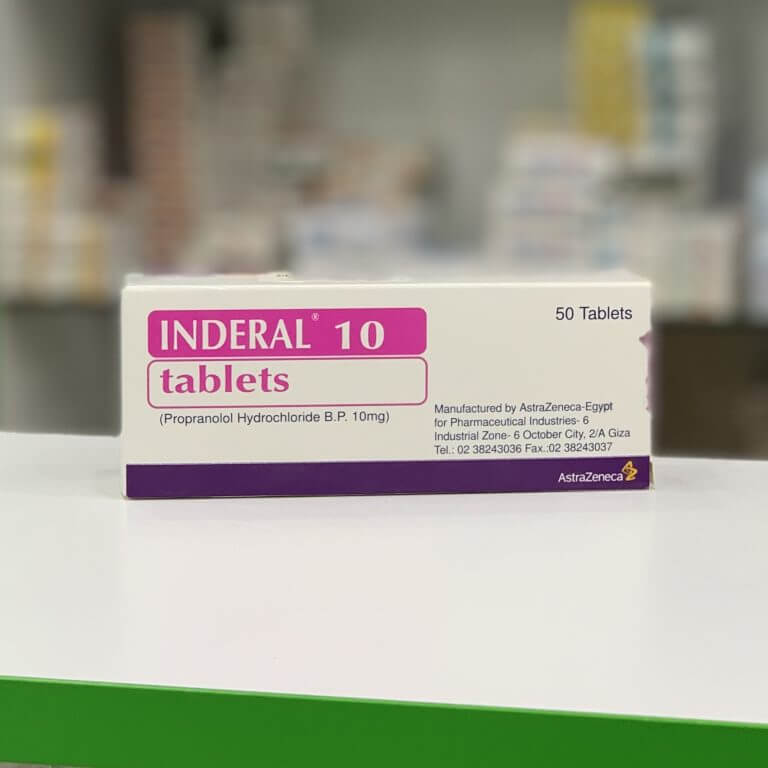
Inderal 10 mg 50 tablets
Composition:
Each tablet contains:
Propranolol hydrochloride 10 mg
Properties:
Non-selective beta-blocker. It has antihypertensive, antianginal and antiarrhythmic effects. Due to the blockade of β-adrenergic receptors, it reduces the formation of cAMP from ATP stimulated by catecholamines, as a result of which it reduces the intracellular intake of calcium ions, has a negative chrono-, dromo-, batmo- and inotropic effect (reduces heart rate, inhibits conductivity and excitability, reduces myocardial contractility). At the beginning of the use of beta-blockers, OPSS increases in the first 24 hours (as a result of a reciprocal increase in the activity of α-adrenergic receptors and the elimination of stimulation of β2-adrenergic receptors of skeletal muscle vessels), but after 1-3 days it returns to the original, and decreases with prolonged use.
Indications:
Arterial hypertension, angina pectoris, sinus tachycardia (including with hyperthyroidism), supraventricular tachycardia, tachysystolic form of atrial fibrillation, supraventricular and ventricular premature beats, hypertrophic cardiomyopathy, myocardial infarction, mitral valve prolapse, subaortic stenosis, sympathetic-adrenal crisis in patients with diencephalic syndrome, neurocirculatory dystonia, portal hypertension, essential tremor, panic attacks, aggressive behavior, migraine (prevention), auxiliary treatment for pheochromocytoma (only in combination with alpha-blockers), thyrotoxicosis (incl.preoperative preparation), thyrotoxic crisis, primary weakness of labor, menopausal vasomotor symptoms, withdrawal syndrome; treatment of akathisia caused by neuroleptics.
Dosage and administration:
An individual dosage of the drug is prescribed by a doctor.
For adults, when taken orally, the initial dose is 20 mg, the frequency of administration is 2-3 times / day. The daily dose is 40-80 mg
Contraindications:
AV block II and III degree, sinoatrial block, severe bradycardia (less than 50 bpm), arterial hypotension, acute or chronic heart failure in the stage of decompensation, acute myocardial infarction (systolic blood pressure less than 100 mm Hg), cardiogenic shock, pulmonary edema, SSS, Prinzmetal’s angina, cardiomegaly (without signs of heart failure), severe peripheral vascular disorders, metabolic acidosis (including diabetic acidosis), pheochromocytoma (without the simultaneous use of alpha-blockers), bronchial asthma, chronic obstructive lung disease, a tendency to bronchospastic reactions, simultaneous use with antipsychotics and anxiolytics (chlorpromazine, trioxazine and others), MAO inhibitors.
Warnings and precautions:
Use with caution in patients with bronchial asthma, COPD, bronchitis, decompensated heart failure, diabetes mellitus, renal and / or hepatic insufficiency, hyperthyroidism, depression, myasthenia gravis, psoriasis, peripheral vascular occlusive diseases, pregnancy, during lactation, in elderly patients, in children (efficacy and safety have not been determined).
With caution in newborns and infants: cardiovascular diseases, heart failure; diabetes; respiratory diseases; psoriasis; RNACE syndrome; hyperkalemia; allergic reactions in the anamnesis. During the period of treatment, exacerbation of psoriasis is possible.
With pheochromocytoma, propranolol can be used only after taking an alpha-blocker. After a long course of treatment, propranolol should be discontinued gradually, under the supervision of a doctor.
Side effects:
From the nervous system: increased fatigue, weakness,dizziness, headache.
On the part of the sense organs: a decrease in the secretion of lacrimal fluid (dryness and soreness of the eyes).
On the part of the cardiovascular system: sinus bradycardia, AV blockade.
On the part of the digestive system: nausea, vomiting, discomfort in the epigastric region, constipation or diarrhea. From the respiratory system: nasal congestion, bronchospasm.
From the endocrine system: changes in blood glucose concentration (hypo- or hyperglycemia).
From the hematopoietic system: thrombocytopenia (unusual bleeding and hemorrhage), leukopenia.
Dermatological reactions: increased sweating, psoriasis-like skin reactions, exacerbation of psoriasis symptoms. Allergic reactions: itching, skin rash, urticaria.
Storage method:
Store at a temperature not exceeding 30°C.
Package:
The cardboard box contains 5 blisters of 10 tablets, paper leaflet.
 Русский
 English
 عربي
عربي