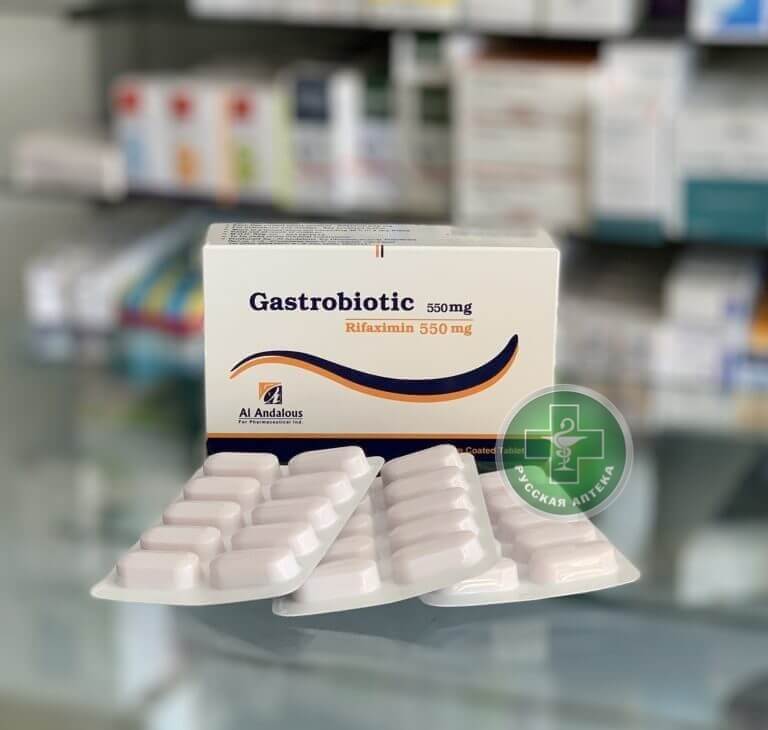
Gastrobiotic 200 mg 20 tablets
162£
View analogs
Treatment of digestive tract infections caused by bacteria sensitive to rifaximin, including: – acute gastrointestinal infections;
- travelers’diarrhea;
- syndrome of excessive growth of microorganisms in the intestine; – with hepatic encephalopathy;
- with symptomatic uncomplicated diverticular disease of the colon;
- with chronic intestinal inflammation.
Prevention of infectious complications in colorectal surgery.
Buy
Product quantities
Form of Release: Tablets
Product Brand: ِAlandalous pharmaceutical
Product Categories: Antibiotics • Antibiotics for intestinal infections
Trade name:
Gastrobiotic
Gastrobiotic
Composition:
Each tablet contains:
Rifaximin 200 mg
Auxiliary components:
sodium carboxymethyl starch, glyceryl palmitostearate, colloidal silicon dioxide, talc, microcrystalline cellulose.
Properties:
Rifaximin is a broad-spectrum antibiotic from the rifamycin group. Like other members of this group, it irreversibly binds the beta subunits of the bacterial enzyme DNA-dependent RNA polymerase and, therefore, inhibits the synthesis of RNA and bacterial proteins. As result of irreversible binding to the enzyme, rifaximinexhibits bactericidal properties against susceptible bacteria. The drug has a
wide spectrum of antimicrobial activity, including most gram-negative and grampositive, aerobic and anaerobic bacteria. The broad antibacterial spectrum of rifaximin helps to reduce the pathogenic intestinal bacterial load, which causes some pathological conditions.
The drug reduces:
- the formation of ammonia and other toxic compounds by bacteria, which in the case of severe liver disease, accompanied by a violation of the detoxification process, play a role in the pathogenesis and clinical manifestations of hepatic encephalopathy; increased proliferation of bacteria in the syndrome of overgrowth of microorganisms in the intestine;
- the presence of bacteria in the colon diverticulum, which may be involved in inflammation in and around the diverticular sac and possibly play a key role in the development of symptoms and complications of diverticular disease;
the intensity of the antigenic stimulus, which, in the presence of genetically determined defects in mucosal immunoregulation and / or in protective function, can initiate or permanently maintain chronic intestinal inflammation;
- the risk of infectious complications during colorectal surgery.
Indications:
Treatment of gastrointestinal tract infections caused by bacteria sensitive to rifaximin, including: – acute gastrointestinal infections; travelers’diarrhea; – syndrome of overgrowth of microorganisms in the intestine; – with hepatic encephalopathy; – with symptomatic uncomplicated diverticular disease of the colon; – in chronic intestinal inflammation. Prevention of infectious complications in colorectal surgical interventions.
Method of administration and dosage:
The drug is taken orally with a glass of water, regardless of the meal. When treating diarrhea, adults and children over 12 years of age ar prescribed 200 mg (1 tablet) every 6 hours. Treatment of traveler’sdiarrhea should not exceed 3 days. The duration of treatment with Gastrobiotic@ should not exceed 7 days. A repeated course of treatment should be carried out no earlier than 20-40 days later. The total duration of treatment is determined by the clinical condition of the patients. Doses and frequency of administration can be changed on the recommendation of a doctor
Contraindications:
– diarrhea, accompanied by fever and loose stools with blood; – intestinal obstruction
(including partial); – severe ulcerative intestinal lesion; – children under 12 years of age (efficacy and safety have not been established); – hereditary fructose intolerance, malabsorption glucose-galactose, sucraseisomaltase deficiency (for a dosage form of a granule for preparing a suspension for oral administration); – hypersensitivity to rifaximin or other rifamycins or to any of the components that make up the drug. With caution: renal failure, concomitant use with oral contraceptives, concomitant use with a Pglycoprotein inhibitor such as cyclosporin.
Precautions:
Patients should be warned that, despite the insignificant absorption of rifaximin (less than 1%), the drug can cause reddish staining of urine. This is due to the active substance rifaximin, which, like most antibiotics of this series (rifamycins), has a reddish-orange color. With the development of superinfection with microorganisms insensitive to rifaximin, the drug should be discontinued and appropriate therapy should be prescribed. Due to the effect of the drug on the intestinal flora, the effectiveness of oral contraceptives containing estrogens may decrease after taking it. It is recommended to use additional contraceptive measures while taking the drug, especially if the content of estrogen in oral contraceptives is less than 50 1-lg. Taking the drug is possible no earlier than 2 hours after taking activated carbon.
Side effects:
From the side of the central nervous system: often – dizziness, headache; infrequently hypesthesia, migraine, paresthesia, drowsiness, pain in the sinuses; unknown light-headedness, agitation.On the part of the organ of vision: infrequently – diplopia. On the part of the inner ear: infrequently – pain in t ear, systemic dizziness; on the part of the respiratory system: infrequently – shortness of
breath, dry throat, nasal congestion, pain in the oropharynx, cough, rhinorrhea; on the part of the digestive system: often – bloating, pain in stomach, constipation, diarrhea, flatulence, nausea, tenesmus, vomiting, urge to defecate; infrequently – pain in the upper abdomen, ascites, dyspepsia, impaired gastrointestinal motility, secretion of mucus and blood with stools, dry lips, “hard” stool, increased AST activity, ageusia; unknown – change in liver function tests, heartburn. From the urinary system: infrequently – glucosuria, polyuria, pollakiuria, hematuria, proteinuria. From the skin and subcutaneous fat: infrequently – rash, sunburn; unknown – angioedema, allergic dermatitis, exfoliative dermatitis, eczema, erythema, pruritus, purpura, urticaria, erythematous rash, erythema of the palms, itching of the genitals.On the part of the musculoskeletal system: infrequently – back pain, spasm, muscles, muscle myalgia, neck pain. Infections: infrequently – candidiasis, herpes simplex, nasopharyngitis, pharyngitis, upper respiratory tract infections; unknown Clostridial infection. Reproductive system:
infrequently – polymenorrhea. Other: often fever. infrequently – rash, sunburn; unknown angioedema, allergic dermatitis, exfoliative dermatitis, eczema, erythema, pruritus, purpura, urticaria, erythematous rash, erythema of the palms, itching of the genitals.On the part of the musculoskeletal system: infrequently – back pain, spasm, muscles, muscle myalgia, neck pain. Infections: infrequently – candidiasis, herpes simplex, nasopharyngitis, pharyngitis, upper respiratory tract infections; unknown – Clostridial infection. Reproductive system: infrequently polymenorrhea. Other: often – fever. infrequently – rash, sunburn; unknown angioedema, allergic dermatitis, exfoliative dermatitis, eczema, erythema, pruritus, purpura, urticaria, erythematous rash, erythema of the palms, itching of the genitals.On the part of the musculoskeletal system: infrequently – back pain, spasm, muscles, muscle myalgia, neck pain. Infections: infrequently – candidiasis, herpes simplex, nasopharyngitis, pharyngitis, upper respiratory tract infections; unknown – Clostridial infection. Reproductive system: infrequently polymenorrhea. Other: often – fever. muscle weakness, myalgia, neck pain. Infections: infrequently – candidiasis, herpes simplex, nasopharyngitis, pharyngitis, upper respiratory tract infections; unknown – Clostridial infection. Reproductive system: infrequently polymenorrhea. Other: often – fever. muscle weakness, myalgia, neck pain. Infections: infrequently – candidiasis, herpes simplex,
nasopharyngitis, pharyngitis, upper respiratory tract infections; unknown – Clostridial infection. Reproductive system: infrequently polymenorrhea. Other: often – fever.
Storage method:
At a temperature not higher than 30 degrees.
Packaging:
The cardboard box holds 1, 2 or 3 blisters of 10 tablets.
Tags, Keywords:
Active Ingredients:
No comments yet. Be the first to write one.
Your comment will be published after moderation.
You’ll receive a notification to your email when someone replies.
Русский
English
عربي

