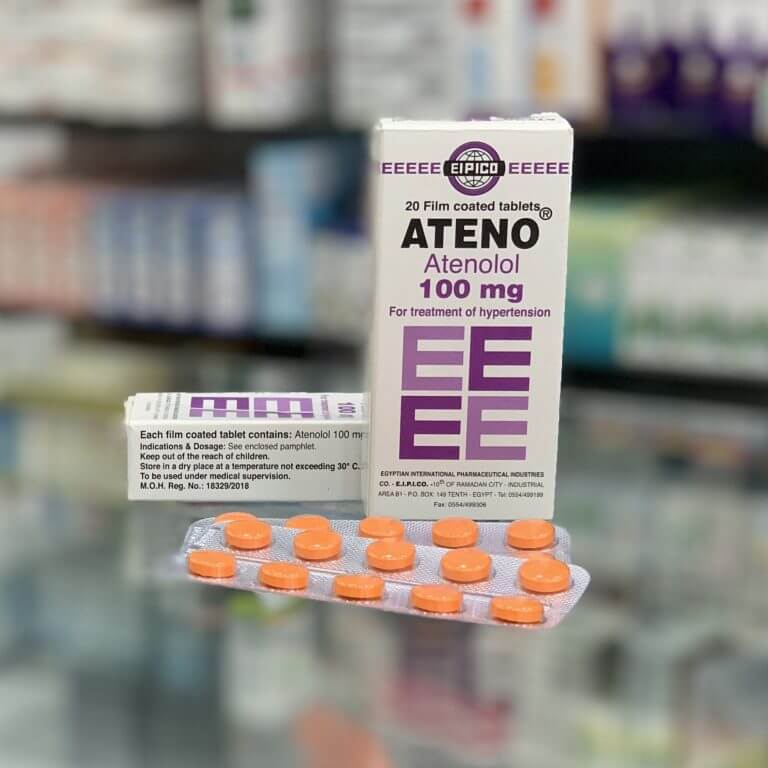
Ateno 100 mg 20 tablets
Composition:
Each p/ o tablet contains:
Atenolol 100mg
Properties:
Atenolol is a cardioselective beta blocker. It reduces the speed and force of contraction of the heart and reduces the rate of passage of impulses through the conducting system. The main effect is to reduce the heart’s response to stress and exercise. There is no proper sympathomimetic activity and membrane stabilizing properties.
Indications: treatment of hypertension, coronary insufficiency.
Mode of application:
Hypertension, the usual dose is 50-100 mg per day, orally in single or divided doses, or up to 200 mg per day, as needed. Angina pectoris, the usual dose is 50-100 mg per d orally as a single dose. Ateno can be administered simultaneously with diuretics and
other antihypertensive drugs. With renal failure, dosage reduction is required; for patients on hemodialysis: 50 mg after each dialysis.
Contraindications:
hypersensitivity to the drug. Sinus bradycardia and heart block (second or third degree). Metabolic acidosis and severe peripheral arterial disease. Uncontrolled heart failure. During pregnancy and breastfeeding.
Precautions:
take with caution in patients with impaired renal function, diabetic patients. It can be used in patients with chronic obstructive bronchopathy, however, in patients with asthma, bronchospasm may occur, which is suppressed with salbutamol. Treatment of Ateno should not be stopped suddenly, death is possible. Medication should be stopped gradually over 1 to 2 weeks. The anesthesiologist should be aware of the use of atenolol in patients under general anesthesia.
Side effects:
cold extremities, muscle fatigue, bradycardia, hypotension and sleep disturbances. Nausea, vomiting and other gastrointestinal disturbances, dizziness and blurred vision may occur.
Storage:
Keep out of the reach of children.
Packaging:
the box contains 2 blisters of 10 tablets each.
 Русский
 English
 عربي
عربي