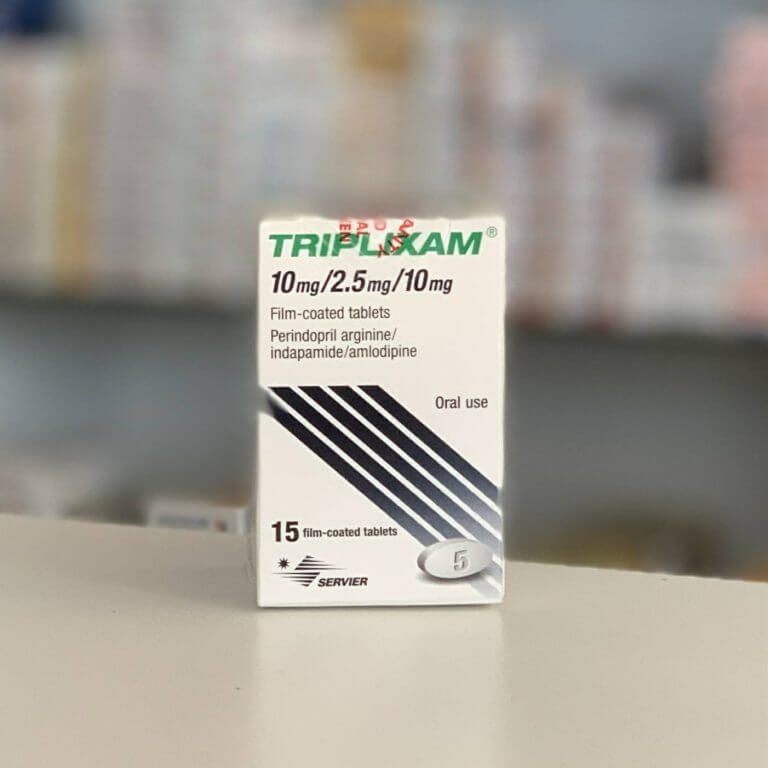
Triplixam 10 mg/2.5 mg/10 mg 15 tablets
Compound:
Each tablet contains:
perindopril arginine 10 mg
indapamide 2.5 mg
amlodipine besylate 13.870 mg, which corresponds to the content of amlodipine 10 mg
Auxiliary components:
calcium carbonate + pregelatinized corn starch, microcrystalline cellulose, sodium croscarmellose, magnesium stearate, colloidal silicon dioxide, pregelatinized starch.
Film shell: glycerol, hypromellose, macrogol-6000, magnesium stearate, titanium dioxide.
Properties:
Triplixam is a combination drug that includes three antihypertensive components, each of which complements the action of others in controlling blood pressure in patients with arterial hypertension. Amlodipine is a slow calcium channel blocker (BMCC), a dihydropyridine derivative, indapamide is a sulfonamide diuretic, perindopril is an inhibitor of the enzyme that converts angiotensin I to angiotensin II (ACE inhibitor).
The pharmacological properties of Triplixam combine the properties of each of its active ingredients. In addition, the combination of amlodipine, indapamide and perindopril enhances the antihypertensive effect of each of the components.
Indications:
Therapy of arterial hypertension with a decrease in blood pressure while taking amlodipine, indapamide and perindopril in the same doses.
Dosage and administration:
The drug is taken orally, 1 tab. 1 time / day, preferably in the morning before meals.
The dose of Triplixam is selected after the previous dose titration of the individual components. The maximum daily dose is 1 tab. at a dosage of 10 mg + 2.5 mg + 10 mg.
Contraindications:
– hypersensitivity to the active and auxiliary substances that are part of the drug, sulfonamide derivatives, dihydropyridine derivatives, other ACE inhibitors, any other substances that are part of the drug;
– patients on hemodialysis;
– untreated heart failure in the stage of decompensation;
– severe impairment of kidney function;
– moderate impairment of kidney function;
– angioedema (Quincke’s edema) against the background of taking ACE inhibitors in history;
-hereditary/idiopathic angioedema;
-pregnancy;
– period of breastfeeding;
– severe liver dysfunction;
-hypokalemia;
-simultaneous use with ARA II in patients with diabetic nephropathy;
-simultaneous use with a combination of valsartan + sacubitril;
– pronounced bilateral stenosis of the renal arteries or stenosis of the artery of the only functioning kidney;
– simultaneous use with drugs that can cause polymorphic ventricular tachycardia of the “pirouette” type;
-simultaneous use with drugs that prolong the QT interval;
– age up to 18 years.
Precautionary measures:
Potassium-sparing drugs, dietary supplements containing potassium, or salt substitutes with potassium. The simultaneous use of perindopril with potassium-sparing drugs or dietary supplements containing potassium is not recommended.
Hypersensitivity / angioedema. With the use of ACE inhibitors, including perindopril, rare cases of angioedema of the face, extremities, lips, tongue, glottis and / or larynx have been reported. This can happen at any time during treatment.
Side effects:
The most common adverse reactions reported with perindopril, indapamide and amlodipine are dizziness, headache, paresthesia, drowsiness, dysgeusia, blurred vision, diplopia, tinnitus, vertigo, palpitation, flushing, hypotension (and related symptoms). ), cough, shortness of breath, gastrointestinal disturbances (abdominal pain, constipation, diarrhea, dyspepsia, nausea, vomiting, change in the rhythm of bowel movements), pruritus, skin rashes, maculopapular rash, muscle cramps, swelling of the ankles, asthenia, edema and fatigue.
Storage method:
Store at a temperature not exceeding 30 degrees.
Package:
The cardboard box contains 15 tablets, paper instructions.
 Русский
 English
 عربي
عربي