Русский
 English
 عربي
عربي
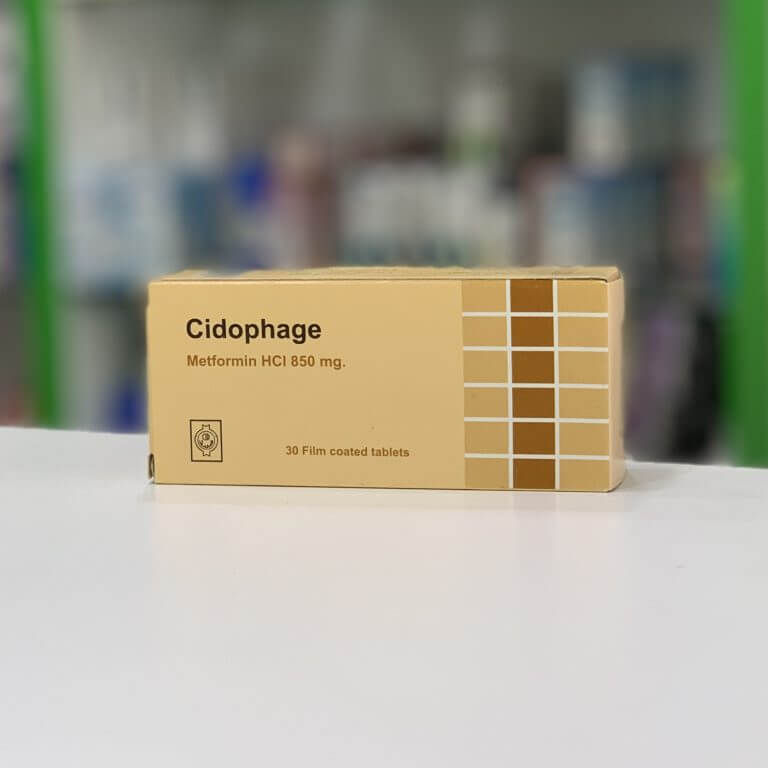
Cidophage 850 mg 30 tablets
96£
View analogsDiabetes mellitus type 2 (insulin-independent) with the ineffectiveness of diet therapy and exercise, in patients with obesity: in adults – as monotherapy or in combination with other oral hypoglycemic agents or with insulin; in children aged 10 years and older – as monotherapy or in combination with insulin.
Buy
Product quantities
Form of Release: Tablets
Product Brand:
CID Pharmaceuticals
About the brand
Product Categories: Diabetes


Cidophage 850 mg 30 tablets
Composition:
Each tablet contains:
Metformin hydrochloride 850 mg
Inactive ingredients:
Polyvinylpyrrolidone K90, liquid paraffin, magnesium stearate, cellulose acetate phthalate, diethyl phthalate.
Volatile component: Ethanol 96%, ethyl acetate, isopropanol.
Properties:
Oral hypoglycemic agent from the group of biguanides (dimethylbiguanide). The mechanism of action of metformin is associated with its ability to suppress gluconeogenesis, as well as the formation of free fatty acids and fat oxidation. Increases the sensitivity of peripheral receptors to insulin and the utilization of glucose by cells. Metformin does not affect the amount of insulin in the blood, but changes its pharmacodynamics by reducing the ratio of bound to free insulin and increasing the ratio of insulin to proinsulin.
Metformin stimulates glycogen synthesis by acting on glycogen synthetase. Increases the transport capacity of all types of membrane glucose carriers. Delays the absorption of glucose in the intestine.
Reduces the level of triglycerides, LDL, VLDL. Metformin improves the fibrinolytic properties of blood by suppressing the tissue-type plasminogen activator inhibitor.
While taking metformin, the patient’s body weight either remains stable or moderately decreases.
Indications:
Diabetes mellitus type 2 (insulin-independent) with the ineffectiveness of diet therapy and exercise, in patients with obesity: in adults – as monotherapy or in combination with other oral hypoglycemic agents or with insulin; in children aged 10 years and older – as monotherapy or in combination with insulin.
Dosage and administration:
The optimal dosing regimen is determined by the doctor. Compliance of the dosage form of a particular drug with indications for use and dosing regimen should be strictly observed.
Taken orally, during or after a meal.
The dose and frequency of administration depend on the therapy regimen, the age of the patient and the dosage form used.
Contraindications:
Acute or chronic metabolic acidosis, diabetic ketoacidosis, diabetic precoma and coma; renal failure, impaired renal function (CC <60 ml / min); dehydration, severe infection, hypoglycemic shock, which can lead to impaired renal function; clinically pronounced symptoms of acute and chronic diseases that can lead to the development of tissue hypoxia (including heart failure, acute myocardial infarction, respiratory failure); the use of contrast iodine-containing substances for intravascular administration (including during intravenous urography, intravenous cholangiography, angiography, CT); acute alcohol intoxication, chronic alcoholism; hypersensitivity to metformin.
Warnings and precautions:
Not recommended for acute infections, exacerbation of chronic infectious and inflammatory diseases, injuries, acute surgical diseases, the risk of dehydration.
When metformin is used as monotherapy in accordance with the dosing regimen, hypoglycemia, as a rule, does not occur. However, when combined with insulin or sulfonylurea derivatives, there is a risk of hypoglycemia. In such cases, particularly careful monitoring of blood glucose concentration is necessary.
During treatment, patients should avoid alcohol due to the risk of developing lactic acidosis.
Side effects:
From the digestive system: possible (usually at the beginning of treatment) nausea, vomiting, diarrhea, flatulence, discomfort in the abdomen; in isolated cases – a violation of liver function, hepatitis (disappear after stopping treatment).
From the side of metabolism: very rarely – lactic acidosis (treatment discontinuation is required).
On the part of the hematopoietic system: very rarely – malabsorption of vitamin B12.
Storage:
Store at a temperature not exceeding 30°C.
Package:
Carton box contains 30 or 60 tablets and paper leaflet.
Tags, Keywords:
Active Ingredients:
No comments yet. Be the first to write one.
Your comment will be published after moderation.
You’ll receive a notification to your email when someone replies.