Русский
 English
 عربي
عربي
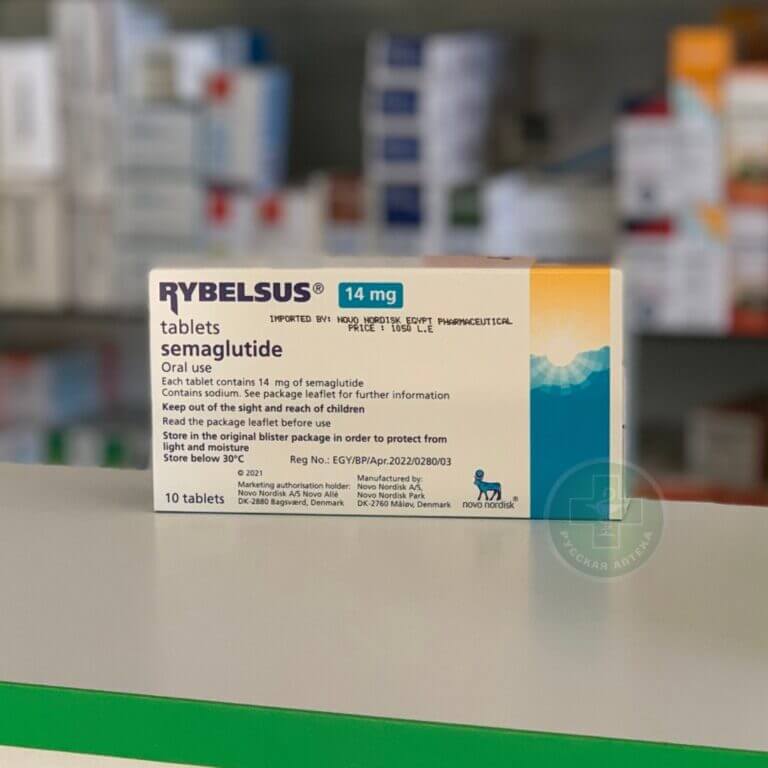
Rybelsus 14 mg 10 tablets
1575£
View analogsType 2 diabetes mellitus in adults:
As monotherapy in cases of intolerance or contraindications to metformin.
In combination with other hypoglycemic agents (metformin, sulfonylurea derivatives, insulin, etc.) when adequate glycemic control cannot be achieved.
Buy
Product quantities
Form of Release: Tablets
Product Brand:
Novo Nordisk
About the brand
Product Categories: Diabetes


Rybelsus 14 mg 10 tablets
Composition:
Active substance:
semaglutide 14 mg.
Excipients:
Sodium salcaprozate.
Povidone K90.
Microcrystalline cellulose.
Magnesium stearate.
Product Description:
The first oral agonist of glucagon‑like peptide‑1 (GLP‑1) receptors.
The drug mimics the action of endogenous GLP‑1, enhancing insulin secretion in response to elevated glucose levels, reducing glucagon secretion, and delaying gastric emptying.
This leads to a reduction in fasting and postprandial blood glucose levels and also contributes to weight loss.
The drug has proven cardioprotective effects, reducing the risk of cardiovascular complications in patients with type 2 diabetes.
Indications for use:
Type 2 diabetes mellitus in adults:
As monotherapy in cases of intolerance or contraindications to metformin.
In combination with other hypoglycemic agents (metformin, sulfonylurea derivatives, insulin, etc.) when adequate glycemic control cannot be achieved.
Method of administration and dosage:
Tablets are taken in the morning on an empty stomach, with a small amount of water (no more than 120 ml), at least 30 minutes before the first meal or drink.
The tablet must not be chewed, divided, or crushed.
Initial dose: 3 mg once daily for the first 30 days.
Then switch to 7 mg once daily.
If further effect is required — increase to 14 mg once daily.
A missed dose should be taken the next day; a double dose must not be taken on the same day.
Contraindications:
Hypersensitivity to semaglutide or excipients.
Type 1 diabetes mellitus.
Diabetic ketoacidosis.
Age under 18 years.
Pregnancy and breastfeeding.
Precautions:
Caution in severe renal or hepatic impairment.
In patients with gastroparesis and severe gastrointestinal diseases.
When combined with other hypoglycemic agents, risk of hypoglycemia may occur.
Patients should be informed about symptoms of pancreatitis; treatment should be discontinued if suspected.
Adverse reaction / Side effects:
Very common: nausea, diarrhea.
Common: vomiting, abdominal pain, decreased appetite, dyspepsia, constipation.
Sometimes: hypoglycemia (in combination with other agents), headache, fatigue.
Rare: pancreatitis, allergic reactions.
Laboratory findings: possible increase in amylase and lipase.
Pregnancy and lactation:
Contraindicated.
In case of planned pregnancy, therapy should be discontinued at least 2 months before conception.
During breastfeeding, risk to the child cannot be excluded, therefore the drug is not prescribed.
Storage conditions:
Store at a temperature not exceeding 30 °C, in the original blister packaging to protect from light and moisture, out of the reach of children.
Packaging:
Cardboard box, 10 tablets.
Tags, Keywords:
Active Ingredients:
No comments yet. Be the first to write one.
Your comment will be published after moderation.
You’ll receive a notification to your email when someone replies.