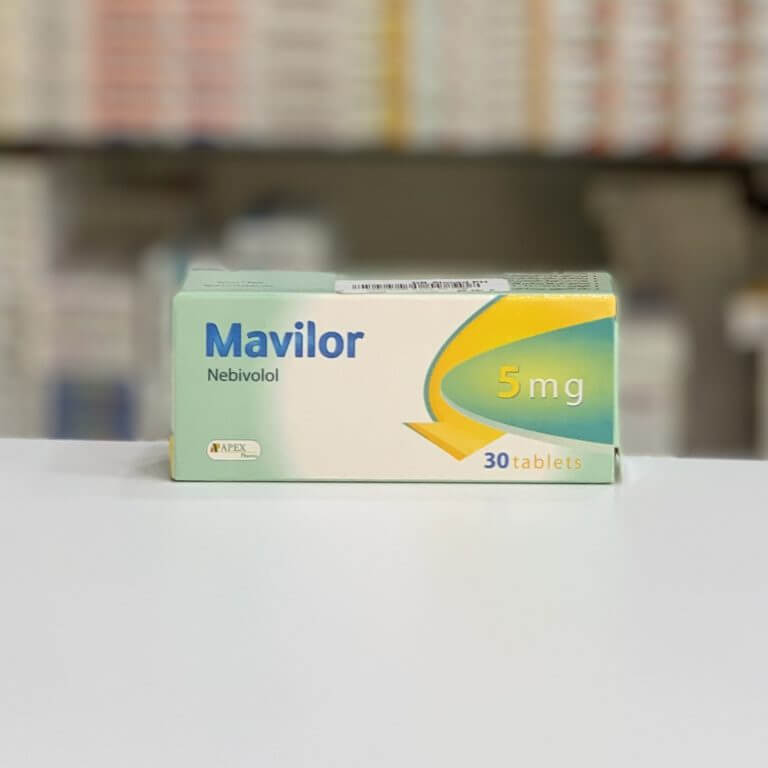
Mavilor 5 mg 30 tablets
Compound:
Each tablet contains:
Nebivolol hydrochloride 5 mg
Auxiliary components:
Lactose monohydrate, croscarmellose sodium, starch, microcrystalline cellulose, magnesium stearate, polysorbate.
Properties:
Cardioselective beta1-blocker III generation with vasodilating properties. The active substance is a racemate consisting of two enantiomers: D-nebivolol and L-nebivolol. D-nebivolol is a competitive and highly selective β1-adrenergic blocker; L-nebivolol exerts a mild vasodilating effect by modulating the release of vasodilatory factor (NO) from the vascular endothelium.
Nebivolol reduces heart rate and blood pressure at rest and during exercise, reduces the end diastolic pressure of the left ventricle, reduces peripheral vascular resistance, improves diastolic function of the heart (reduces filling pressure), increases the ejection fraction; causes an antianginal effect in patients with coronary artery disease.
The hypotensive effect is also due to a decrease in the activity of the renin-angiotensin system (does not directly correlate with changes in plasma renin activity).
The antiarrhythmic effect is due to the suppression of the pathological automatism of the heart (including in the pathological focus) and the slowing of AV conduction.
Indications:
Arterial hypertension.
Stable chronic heart failure of mild to moderate severity (as part of combination therapy) in patients over 70 years of age.
Dosage and administration:
The optimal dosage regimen is determined by the doctor. Compliance of the dosage form of a particular drug with indications for use and dosing regimen should be strictly observed.
Apply inside. The dosage regimen is set individually, depending on the indications, the clinical situation and the age of the patient. The average daily dose is 2.5-5 mg. The maximum daily dose is 10 mg.
Contraindications:
Hypersensitivity to nebivolol; acute heart failure; chronic heart failure in the stage of decompensation (requiring intravenous administration of drugs with a positive inotropic effect); severe arterial hypotension (systolic blood pressure less than 90 mm Hg); SSSU, including sinoatrial blockade; AV block II and III degree (without artificial pacemaker); bradycardia (heart rate less than 60 bpm); cardiogenic shock; pheochromocytoma (without the simultaneous use of alpha-blockers); metabolic acidosis; severe liver dysfunction; severe renal dysfunction (CC less than 20 ml / min); bronchospasm and bronchial asthma in history; severe obliterating diseases of peripheral vessels (intermittent claudication, Raynaud’s syndrome); myasthenia gravis; depression; simultaneous use with floktafenin, sultopride; breastfeeding period; children and adolescents up to 18 years of age.
Precautionary measures:
It is unacceptable to abruptly stop taking beta-blockers (with a sharp cessation of treatment, the development of the “withdrawal” syndrome is possible), treatment should be stopped gradually if possible.
Beta-blockers should be used with caution in patients with COPD, as bronchospasm may be exacerbated.
Beta-blockers should not be used in patients with untreated chronic heart failure until the condition has stabilized.
Side effects:
From the nervous system: very often – dizziness; often – headache, dizziness, weakness, paresthesia; very rarely – fainting.
From the side of the cardiovascular system: very often – bradycardia; often – aggravation of the course of chronic heart failure, AV blockade of the 1st degree, orthostatic hypotension.
From the respiratory system: often – shortness of breath; infrequently – bronchospasm (including in the absence of obstructive pulmonary disease in history).
From the digestive system: often – nausea, constipation, diarrhea.
Storage method:
Store at a temperature not exceeding 30 degrees.
Package:
The cardboard box contains 3 blisters of 10 tablets, paper instructions.
 Русский
 English
 عربي
عربي