Русский
 English
 عربي
عربي
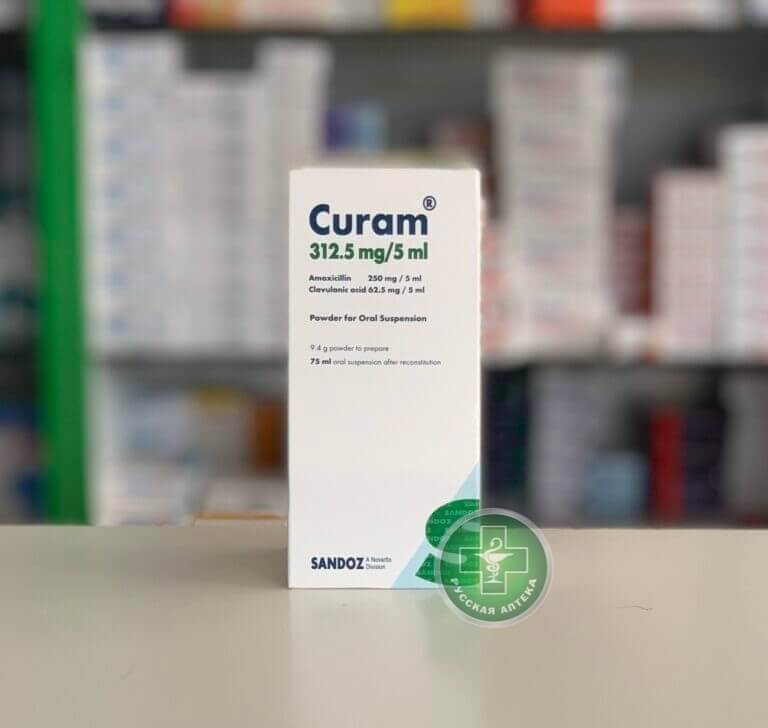
Curam Suspension 312,5 mg 75 ml
82£
View analogsAmoxicillin/Clavulanic acid is used in adults and children to treat the following infections:
- Middle ear and sinus infections
- Respiratory tract infections
- Urinary tract infections
- Skin infections and dental infections
- Bone and joint infections
Buy
Product quantities
Form of Release: Suspension
Product Brand:
Sandoz
About the brand


Curam Suspension 312,5 mg 75 ml
Composition:
Each 5 ml contains :
Amoxicillin Trihydrate 287 mg
( Corresponding to 250 mg of Amoxicillin) potassium Clavulanate 84 mg
(Corresponding to 62.5 mg Clavulanic Acid)
Description:
Antibiotic, belongs to the penicillin group used in the treatment of bacterial rhinosinusitis, pneumonia, otitis media, prophylaxis or treatment against bite wound infection, diabetic foot infection, odontogenic infection and urinary tract infection.
Curam Syrup Belongs To Antibacterial drugs.
How Amoxicillin And Clavulanic Acid Work:
Penicillin kills bacteria by attaching its beta-lactam ring to transeptidase, the enzyme that makes up bacteria’s cell wall, preventing cell wall formation. Without the cell wall, the bacterial cell is exposed to external water and molecular stressors, resulting in bacterial death.
Amoxicillin is similar to penicillin in its bacterial effect
Clavulanic acid belongs to a class of drugs called beta-lactamase inhibitors, an enzyme produced by bacteria to destroy certain antibiotics, thus preventing bacteria from destroying amoxicillin.
Medical Uses:
Amoxicillin/Clavulanic acid is used in adults and children to treat the following infections:
- Middle ear and sinus infections
- Respiratory tract infections
- Urinary tract infections
- Skin infections and dental infections
- Bone and joint infections
How To Use:
For indication & Dosage see pamphlet inside.
Follow all instructions given to you by your doctor or pharmacist
You can give / take amoxicillin before or after food. Spread doses as evenly as possible throughout the day.
Your doctor will advise you on how much medication you should give to your child or you. The usual dose of amoxicillin is 40 mg to 90 mg per kilogram of body weight per day, divided into two or three doses.
Doses may vary between patients depending on the severity and type of infection.
Dosages can be changed in special circumstances, so always follow the instructions of your doctor or pharmacist.
If you take too much medication, talk to your doctor or go to the hospital right away.
If you forget to take the dose, take it as soon as you remember it unless it’s time for the next dose
Do not take a double dose (two doses at the same time) to make up for the forgotten dose.
Side Effects:
Although the following side effects aren’t common to everyone, some patients may complain of:
- Allergic reactions, signs may include: itchy skin or rash, swelling of the face, lips, tongue, body or breathing difficulties.
- Nausea
- Diarrhea
- Other severe skin reactions can include: changes in skin color, subcutaneous bumps, sores, blisters, peeling, redness, pain, itching
- Flu-like symptoms accompanied by a rash, fever, enlarged glands and abnormal blood test results.
Use During Pregnancy And Lactation:
If you are pregnant or breastfeeding, thinking you may be pregnant or planning to have a baby, ask your doctor or pharmacist for advice before taking this medicine.
Your doctor will discuss the risks and potential benefits of using this medicine during pregnancy and lactation.
Both amoxicillin and clavulanic acid cross the placenta. An increased risk of necrotizing enterocolitis in neonates or bowel disorders in children may be associated with amoxicillin/clavulanate when exposure occurs near delivery, as a class, penicillin antibiotics are widely used in pregnant women. Based on available data, penicillin antibiotics are generally considered compatible for use during pregnancy, Amoxicillin/clavulanate is considered compatible for the of treatment airway diseases in pregnant women. Use should be avoided in women at risk for preterm delivery. -Amoxicillin is present in breast milk following administration amoxicillin/clavulanate. The relative infant dose (RID) of amoxicillin following administration of amoxicillin/clavulanate is 0.02% to 0.07%. In general, breastfeeding is considered acceptable when the RID is <10%, amoxicillin/clavulanate is considered compatible with breastfeeding when used in usual recommended doses.
Warnings And Precautions:
Talk to your doctor or pharmacist before taking amoxicillin/clavulanic acid if:
You have a fever
You have liver or kidney problems
Tell your doctor or pharmacist if you are taking, have recently taken, or might take any other medicines including over-the-counter medicines, prescription medicines, herbal supplements, vitamins and supplements
Keep in the original container and keep the container tightly closed.
Shake well before use.
This product contains Aspartam.
Do not use this medicine if lumps of powder are still visible in the bottle before reconstitution.
Do not use the reconstituted suspension if the colour is not off-white.
Application according to medical instructions.
Storage:
Store at temperature not exceeding 30° C.
Reconstituted suspension should be stored in a refrigerator(2-8° C) and used within 7 days.
Keep this medicine out of the sight and reach of children.
It should be stored in the original can to protect it from moisture.
Do not use this medicine after the expiration date stated on the can/strip/label. The expiration date indicates the last day of the month.
Package:
A Carton Box contains 11.8 g powder to prepare 75 ml oral suspension, a plastic spoon inside
Tags, Keywords:
- Abscess
- lung abscess
- bacterial vaginitis
- secondary infected dermatoses
- gonorrhea
- impetigo
- soft chancre
- pelvio-peritonitis
- pyelitis
- pyelonephritis
- pneumonia
- postpartum sepsis
- prostatitis
- wound infection
- rye
- salpingitis
- salpingoophoritis
- septic abortion
- sinusitis
- otitis media
- tonsillitis
- tuboovarian abscess
- urethritis
- phlegmon
- cervicitis
- cystitis
- pleural empyema
- endometritis
Active Ingredients:
No comments yet. Be the first to write one.
Your comment will be published after moderation.
You’ll receive a notification to your email when someone replies.