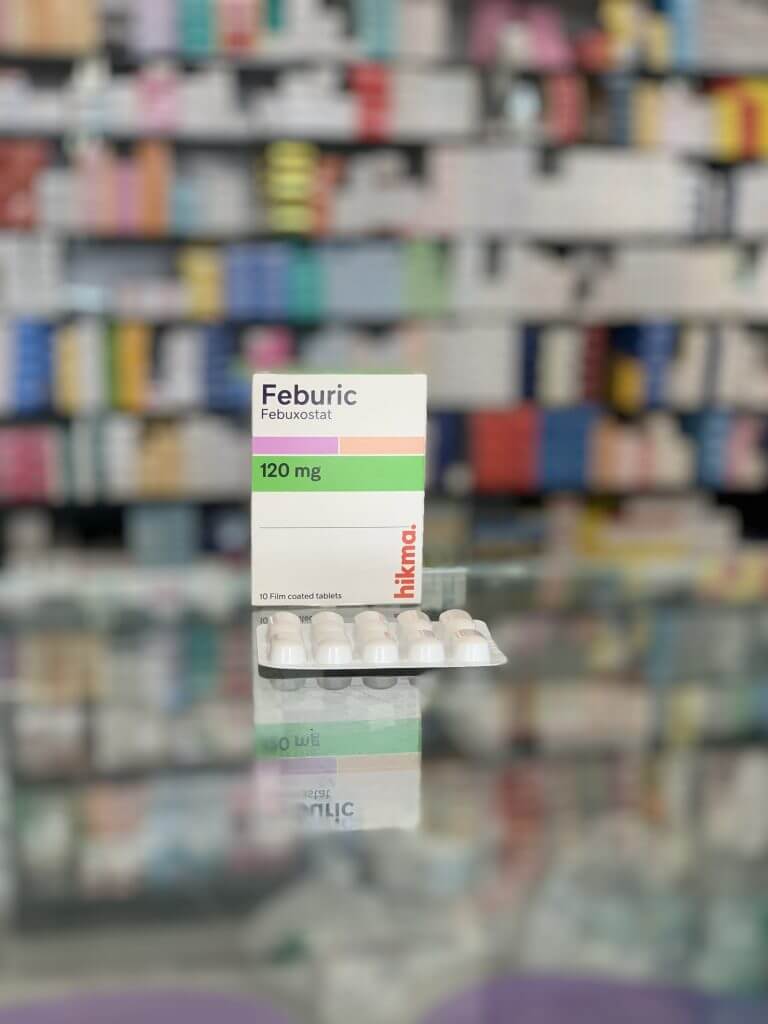
Xanthistop 80 mg 30 tablets
Compound:
Each tablet contains:
Febuxostat 80 mg.
Properties:
- Selective non-purine xanthine oxidase inhibitor, 2-aryl triazole derivative.
- The enzyme xanthine oxidase catalyzes two steps of purine metabolism: the oxidation of hypoxanthine to xanthine and then the oxidation of xanthine to uric acid.
- As a result of selective inhibition of xanthine oxidase (oxidized and reduced forms) by febuxostat, a decrease in the concentration of uric acid in the blood serum occurs.
- The in vitro inhibition constant is less than 1 nM.
Indications:
Treatment of chronic hyperuricemia in conditions accompanied by the deposition of urate crystals (in the presence of tophi and / or gouty arthritis, including a history).
Treatment and prevention of hyperuricemia in adult patients during cytostatic therapy of hemoblastoses with a moderate to high risk of developing tumor disintegration syndrome (only for a dose of 120 mg).
Dosage and administration:
- Taken inside.
- The dose is 80-120 mg 1 time / day.
- The duration of treatment is set individually, depending on the indications.
- The goal of treatment is to lower and maintain serum uric acid levels below 6 mg/dL (357 µmol/L).
Contraindications:
Pregnancy, breastfeeding period;
children’s age up to 18 years;
hypersensitivity to febuxostat.
Precautionary measures:
- Febuxostat should only be started after an acute attack of gout has resolved.
- The use of febuxostat can provoke the development of an acute attack of gout due to the release of urate from tissue depots and a subsequent increase in the concentration of uric acid in the blood serum.
- For the prevention of gout attacks, the simultaneous use of NSAIDs or colchicine for at least 6 months is recommended.
Side effects:
- From the nervous system:
often – headache;
infrequently – dizziness, paresthesia, hemiparesis, drowsiness, change in taste perception, hypesthesia, hyposmia (weakening of smell). - From the endocrine system:
infrequently – an increase in the concentration of TSH in the blood plasma. - From the side of metabolism:
often – attacks of gout;
infrequently – diabetes mellitus, hyperlipidemia. - From the digestive system:
often – diarrhea (more often with the simultaneous use of colchicine), nausea;
infrequently – abdominal pain, bloating. - From the side of the liver and biliary tract:
often – a violation of liver function (more often with the simultaneous use of colchicine);
infrequently – cholelithiasis, increased activity of alkaline phosphatase, LDH in blood plasma; rarely – hepatitis, jaundice, liver damage. - On the part of the skin and subcutaneous tissues:
often – a rash (including various types of rashes mentioned below with a lower frequency). - General reactions:
often – edema;
infrequently – increased fatigue, chest pain.
Storage method:
Store at a temperature not exceeding 30 degrees.
Package:
Cardboard box contains 3 blisters of 10 tablets, paper instructions.
 Русский
 English
 عربي
عربي