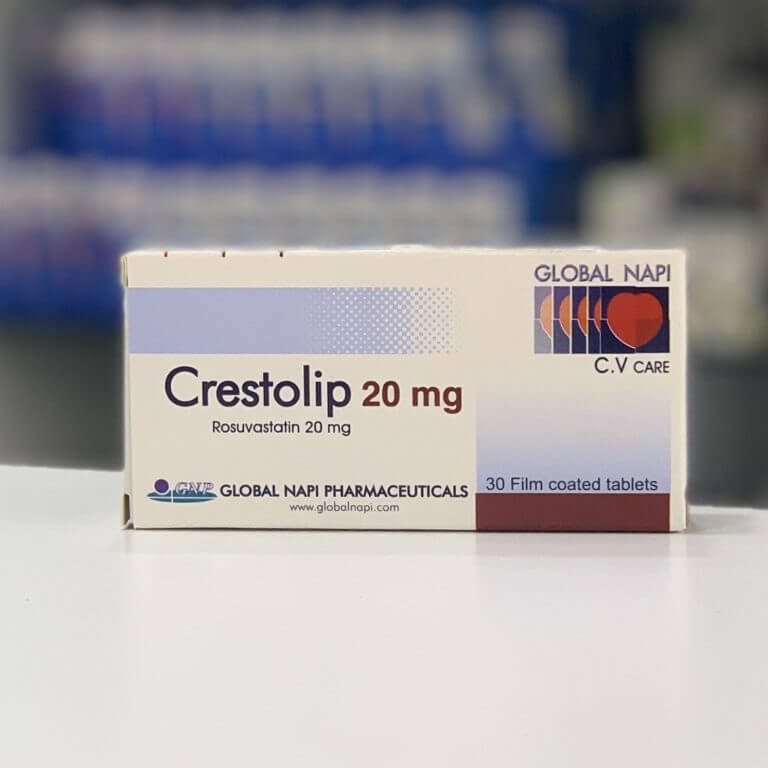
Crestolip 20 mg 30 tablets
Composition:
Rosuvastatin 20 mg
Inactive Ingredients:
Microcrystalline cellulose(avicel pH 102), povidone K30(PVP K30),|lactose spray dried,crospovidone,magnesium stearate
Coat
Opadry II pink 85G34528 (pink)
Properties:
Rosuvastatin is a synthetic lipid-lowering agent from the group of statins, an inhibitor of GMC-CoA reductase. Inhibition of the activity of HMG-CoA reductase leads to a series of successive reactions, resulting in a decrease in the intracellular cholesterol content and a compensatory increase in the activity of LDL receptors and, accordingly, an acceleration of LDL cholesterol (Xc) catabolism.
Indications:
Treatment of hypercholesterolemia in adults, adolescents and children 10 years of age and older with primary hypercholesterolemia (type IIa, including heterozygous familial hypercholesterolemia) or mixed hypercholesterolemia (type IIb) as an adjunct to diet when diet and other non-drug treatments (physical exercise, weight loss) are not enough. Homozygous familial hypercholesterolemia as an adjunct to diet and other cholesterol-lowering therapy, or when such therapy is not appropriate for the patient. Primary prevention of major cardiovascular complications (stroke, heart attack) in adult patients without clinical signs of coronary artery disease, but with an increased risk of its development.
Dosage and administration:
Before starting treatment, the patient should be put on a standard cholesterol-lowering diet, which should be continued during treatment. The dose should be selected individually in accordance with the purpose of therapy and the patient’s response. The drug can be taken at any time of the day, regardless of the meal. The dose range is 50-40 mg once a day.
Treatment of hypercholesterolemia: The recommended starting dose is 5 or 10 mg orally once a day.
With severe hyperlipidemia, the initial dose may be 20 mg. You can adjust the dose for an increase after 4 weeks if necessary. Heterozygous familial hypercholesterolemia in pediatric patients (10–17 years): The usual starting dose is 5 mg/day; The usual dosage range is 5-20mg. Doses should be individualized according to the recommended goal of therapy. Adjustments should be made at intervals of ≥4 weeks.
Homozygous familial hypercholesterolemia: The recommended starting dose is 20 mg once daily. For Asian patients, consider starting therapy with 5 mg once daily. For patients with severe renal insufficiency not on hemodialysis, dosage should start at 5 mg 1 time per day and should not exceed 10 mg 1 time per day.
Patients with predisposing factors for myopathy: The recommended starting dose is 5 mg. The 40 mg dose is contraindicated in some of these patients. At the risk of cardiovascular disorders, the dose is 20 mg 1 time per day. For elderly patients (>70 years), the recommended starting dose is 5 mg per day.
Side effects:
The drug is usually well tolerated. Adverse events observed when taking it are usually mild and transient.
Headache, myalgia, asthenia, constipation, dizziness, nausea, abdominal pain, diabetes mellitus; itching, rash and hives; myopathy, hypersensitivity reactions, pancreatitis; jaundice, hepatitis; arthralgia; memory loss.
Contraindications:
Hypersensitivity to any component of the drug.
Patients with active liver disease, which may include an unexplained persistent increase in liver transaminase levels. Pregnancy and lactation.
Warnings and precautions:
- Use with caution in renal failure, hypothyroidism, personal or family history of hereditary muscle diseases and previous history of muscle toxicity when using other HMG-CoA reductase inhibitors, in chronic alcoholism, in patients over the age of 65 years, in history of liver disease, sepsis , arterial hypotension, during major surgical interventions, trauma, severe metabolic endocrine or electrolyte disorders, with uncontrolled epilepsy, in people of Asian origin (Chinese, Japanese).
- When using rosuvastatin at a dose of 40 mg, it is recommended to monitor indicators of kidney function. It is recommended to carry out the determination of indicators of liver function before the start of therapy and 3 months after the start of therapy.
- The use of rosuvastatin should be discontinued or the dose reduced if the level of serum transaminase activity is 3 times the upper limit of the norm.
- Keep out of reach of children.
Storage:
Store at a temperature not exceeding 25°C in a dry place.
Package:
Carton box contains 3 blisters each of 10 film coated tablets and paper instructions.
 Русский
 English
 عربي
عربي