 Русский
 English
 عربي
عربي


КАК ИЗБАВИТЬСЯ ОТ АКНЕ?
Акне — это распространённая проблема, с которой можно столкнуться в любом возрасте. Если вы ищете эффективные средства от акне или хотите узнать, как быстро избавиться от прыщей, наша статья вам поможет.
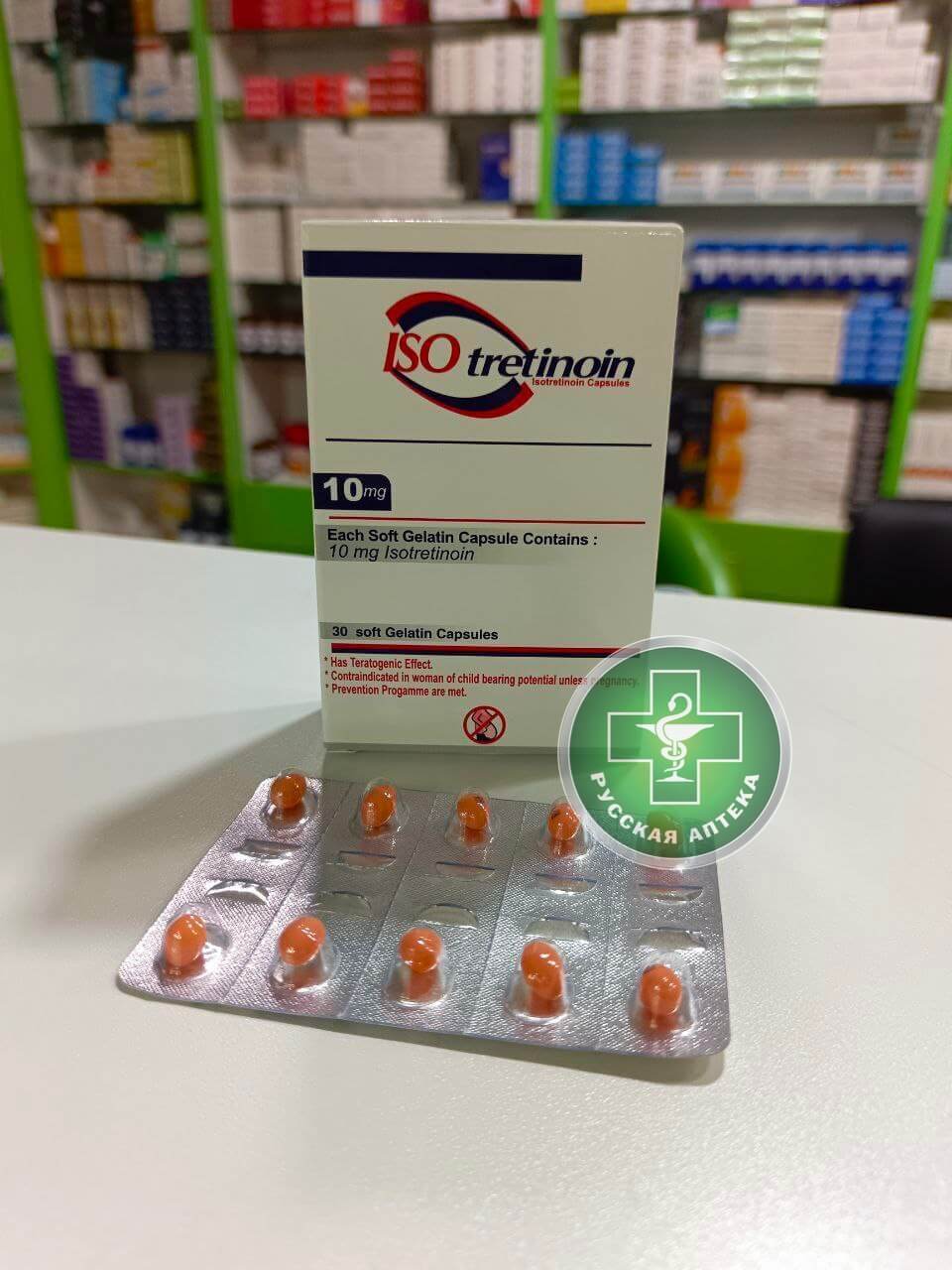
Form of Release: Capsules
Product Brand:
Ranbaxy
About the brand
Product Categories: Dermatology • Anti-acne medicines internal and external


Each capsule contains:
Isotretinoin 10 mg
Auxiliary components:
soybean oil, yellow beeswax, soybean oil, hydrogenated oil, soybean oil, partially hydrogenated;
capsule shell: gelatin, glycerol, Karion 83 (hydrolyzed potato starch, mannitol, sorbitol), canthaxanthin, titanium dioxide; ink for the inscription on the capsule (shellac, iron oxide black oxide).
Isotretinoin is a stereoisomer of trans retinoic acid (tretinoin). The exact mechanism of action of the drug has not yet been elucidated, but it has been established that the improvement in the clinical picture of severe forms of acne is associated with the suppression of the activity of the sebaceous glands and a histologically confirmed decrease in their size. In addition, the anti-inflammatory effect of isotretinoin on the skin has been proven.
Hyperkeratosis of epithelial cells of the hair follicle and sebaceous gland leads to desquamation of corneocytes into the duct of the gland and to blockage of the latter with keratin and excess sebaceous secretion. This is followed by the formation of a comedone and, in some cases, the addition of an inflammatory process. Isotretinoin inhibits the proliferation of sebocytes and acts on acne, restoring the normal process of cell differentiation. Sebum is the main substrate for the growth of
Propionibacterium acnes, therefore, reducing sebum production inhibits bacterial colonization of the duct.
Severe acne (nodular-cystic, conglobatic acne, or acne with risk of scarring).
Acne that does not respond to other therapies.
Inside, with meals, once or twice a day.
The therapeutic efficacy of isotretinoin and its side effects are dose-dependent and vary f patient to patient. This dictates the need fo individual dose selection during treatment.
Treatment with isotretinoin should be started with a dose of 0.5 mg / kg per day. In most patients, the dose ranges from 0.5 to 1.0 mg / kg of body weight per day. Patients with very severe forms of the disease or with acne of the trunk may require higher daily doses – up to 2.0 mg / kg. It has been proven that the frequency of remission and prevention of relapses are optimal when using a course dose of 120-150 mg / kg (for a course of treatment), therefore, the duration of therapy in specific patients varies depending on the daily dose. Complete remission of acne is often achieved within 16-24 weeks of treatment. In patients who are very poorly tolerating the recommended dose, treatment can be continued at a lower dose, but it should be continued for longer.
In most patients, acne completely disappears after a single course of treatment. With a clear relapse, a second course of treatment with Isotretinoin is indicated in the same daily and course dose as the first. Since the improvement can last up to 8 weeks after discontinuation of the drug, a second course should be prescribed no earlier than the en this period.
Dosing in special cases.
In patients with severe renal impairment, treatment should be started with a lower dose (for example, 10 mg / day) and then increased to 1 mg / kg / day or the maximum tolerated.
-pregnancy, planned or established (possibly embryotoxic and teratogenic effects), the period of breastfeeding, hypervitaminosis A, liver failure, concomitant treatment with tetracyclines, severe hyperlipidemia; additionally for rectal use: rectal pathology; for local use: it is not recommended to apply the drug to large areas of the skin during pregnancy, breastfeeding and women planning pregnancy.
Restrictions on use.
For systemic use: history of depression, diabetes mellitus, obesity, alcoholism, lipid metabolism disorders.
Application during pregnancy and lactation.
The use of isotretinoin is contraindicated in pregnancy (embryotoxic and teratogenic effects). During therapy with isotretinoin, breastfeeding must be stopped.
Sensory organs and nervous system: headache, excessive fatigue, seizures, increased intracranial pressure (pseudotumor of the brain: nausea, headache, vomiting, optic nerve edema, visual impairment), xerophthalmia, photophobia, isolated cases of visual impairment.
Digestive system: bleeding from the gums, dryness of the oral mucosa, bleeding, inflammation of the gums, diarrhea, nausea, inflammatory bowel disease (ileitis, colitis), pancreatitis.
Hypervitaminosis A: dryness of mucous
membranes, including lips (cheilitis), skin, nasal cavity (bleeding), pharynx and larynx
(hoarseness), eyes (reversible corneal opacity, conjunctivitis, and contact lens intolerance).
At a temperature not higher than 20-25 degrees.
The cardboard box contains 1 blister of 10 capsules.
Tags, Keywords:
Active Ingredients:
No comments yet. Be the first to write one.
Your comment will be published after moderation.
You’ll receive a notification to your email when someone replies.


Акне — это распространённая проблема, с которой можно столкнуться в любом возрасте. Если вы ищете эффективные средства от акне или хотите узнать, как быстро избавиться от прыщей, наша статья вам поможет.
Our hotline
+2 (010) 202-22-271
Email for contact
[email protected]
Our pharmacies are in
Wide range of products
Help you choose


