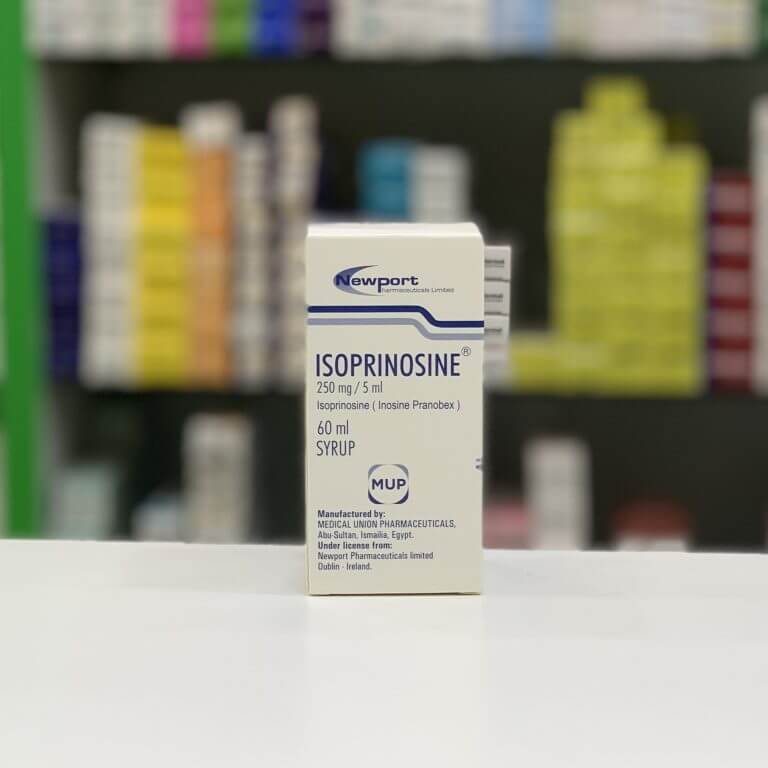
Isoprinosine Syrup 60 ml
Composition:
Inosine pranobex 250 mg/5 ml
Inactive ingredients:
Sucrose, sodium citrate, citric acid monohydrate, methyl parahydroxybenzoate (E218), propyl parahydroxybenzoate (E216), strawberry flavoring(propylene glycol (E1520), flavoring components), purified water.
Properties:
Isoprinosine syrup contains an active substance inosine pranobex, which has antiviral activity and stimulates the immune system.
Indications:
-As an adjuvant in the treatment of recurrent upper respiratory tract infections in immunocompromised patients.
Dosage and administration:
-Always take this medicine exactly as described in this leaflet or as your doctor has told you.
-Dosage is determined on the basis of lean body weight of the patient and the severity of the disease.
-Adults, including the elderly:
The recommended dose is 50 mg/kg of body weight daily (1 ml per 1 kg body weight daily), in 3 or 4 divided doses. Maximum dose is 4 g daily (means 80 ml of syrup daily).
Do not exceed the maximum dose of 80 ml daily.
-Children over the age of 1 year:
The recommended dose is 50 mg/kg of body weight daily, usually 1 ml per 1 kg body weight in 3 or 4 divided doses daily.
The following table shows the dosage depending on the patient’s body weight.
10-14 kg 3 x 5 ml
15-20 kg 3 x 5 – 7.5 ml
21-30 kg 3 x 7.5 – 10 ml
31-40 kg 3 x 10 – 15 ml
41-50 kg 3 x 15 – 17.5 ml
-The duration of treatment is usually 5-14 days. After symptoms subside, continue the treatment for 1-2 days.
-The medicine should not be used in children under 1 year of age.
-Do not take a double dose to make up for a forgotten dose.
Side effects:
- Isoprinosine can cause an allergic reaction. Stop using this medicine and contact your doctor if you experience:
– sudden onset of wheezing;
– difficulty in breathing;
– swelling of the eyelids, face or lips;
– rash or itching (especially if they concern the whole body).
Side effects are presented below:
Very common:
– increased uric acid in the blood, increased levels of uric acid in the urine.
Common:
– headache, vertigo;
– itching, rash;
– joint pain (arthralgia);
– vomiting, nausea, discomfort in the upper abdomen;
– fatigue, feeling unwell;
– increased blood urea, elevation of transaminases and alkaline phosphatase in the blood.
Uncommon:
– nervousness;
– somnolence, difficulty in sleeping (insomnia);
– diarrhea, constipation;
– increased urine volume (polyuria).
Frequency unknown:
– angioedema (serious allergic reaction which causes swelling of the face, lips, tongue or throat.
This can cause difficulty in swallowing and breathing), hypersensitivity, urticaria, anaphylactic reaction (sudden life-threatening allergic reaction affecting the entire body);
– redness of the skin (erythema);
– pain in the upper abdomen.
Contraindications:
– Allergy to inosine pranobex or any of the other ingredients of this medicine. Symptoms of an allergic reaction may include: rash, itching, difficulty breathing, swelling face, lips, throat or tongue.
– If you are currently suffering from gout.
– If you have increased levels of uric acid in the blood.
Warnings and precautions:
- Talk to your doctor or pharmacist before taking Isoprinosine:
– If you have ever had gout or increased levels of uric acid in the blood. Isoprinosine may cause a temporary increase of uric acid in your blood and urine.
– If in the past you had kidney stones.
– If you have kidney problems. In this case, your doctor will closely monitor you.
– If signs of an allergic reaction have been observed, such as a rash, pruritus, difficulty in breathing, swelling of the face, lips, throat or tongue. In this case, you should stop treatment immediately and contact your doctor.
– If the treatment is long-term (3 months or longer). Your doctor will recommend regular blood count and will monitor your renal function and liver function. Renal stones may form during long-term treatment.
The medicine should not be used in children under 1 year of age.
- Other medicines and Isoprinosine:
Tell your doctor or pharmacist if you are using, have recently used or might use any of these medicines:
– allopurinol or medicines used to treat gout;
– medicines that increase the excretion of uric acid, including diuretics, e.g. furosemide, torasemide, ethacrynic acid, hydrochlorothiazide, chlorthalidone, indapamide;
– medicines that affect the immune system, e.g. used after organ transplantation or in atopic dermatitis;
– zidovudine used to treat AIDS.
- Pregnancy and breast-feeding:
If you are pregnant or breast-feeding, think you may be pregnant or are planning to have a baby, ask your doctor or pharmacist for advice before taking this medicine.
Isoprinosine should not be administered during pregnancy or breast-feeding unless your doctor decides the benefits outweigh the potential risk.
- Driving and using machines:
Isoprinosine has no or negligible influence on the ability to drive and use machines.
- If you have an intolerance to some sugars, contact your doctor before taking this medicinal product. 5 ml of syrup contains 3250 mg of sucrose. This should be taken into account in patients with diabetes mellitus.
Storage:
Store in a cool dry place. Do not freeze.
Package:
Carton box holds an amber glass bottle 60 ml, measuring cup and an insert leaflet
 Русский
 English
 عربي
عربي