 Русский
 English
 عربي
عربي
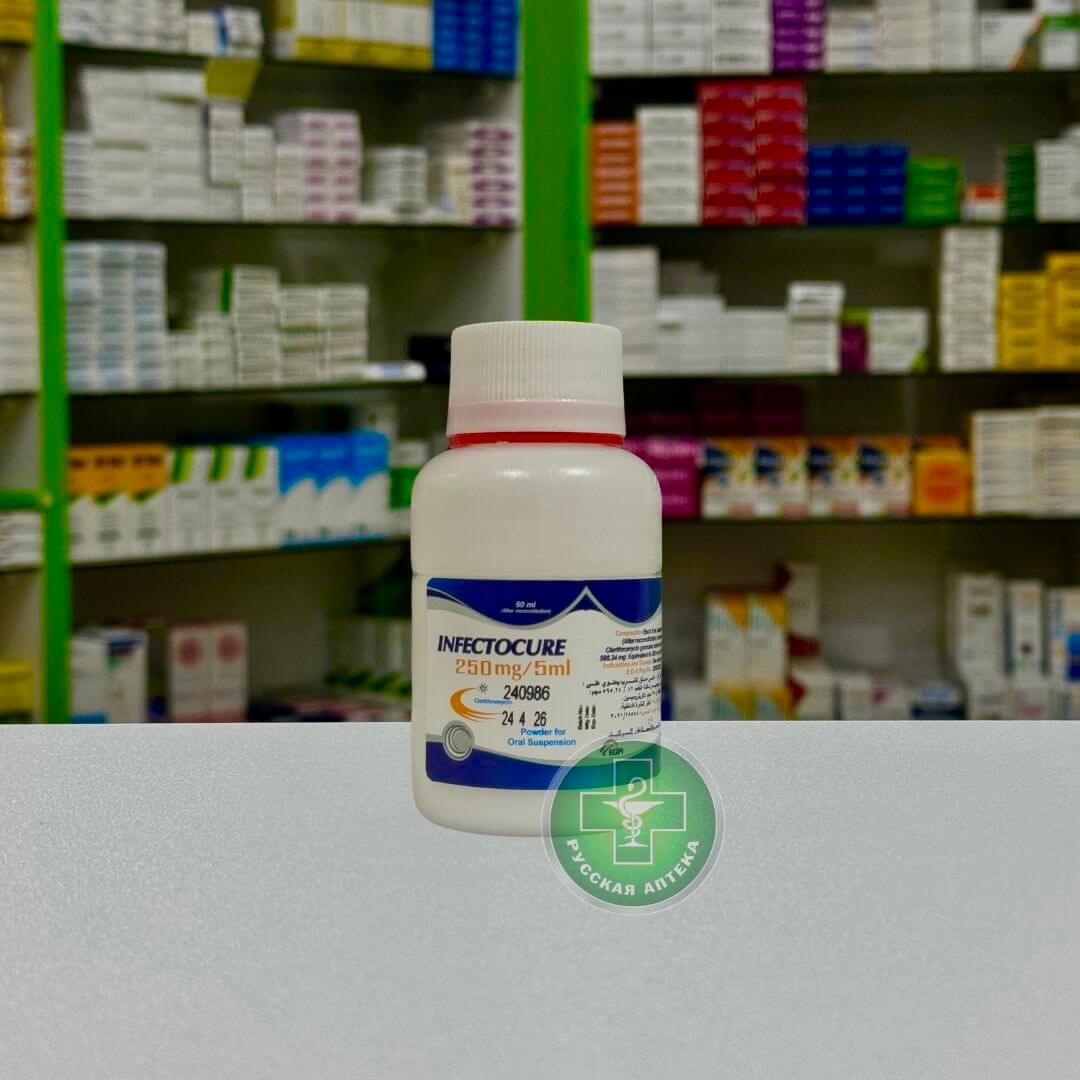
Infectocure 250 mg/5 ml Suspension 60 ml
135£
View analogs- Upper Respiratory Tract and ENT Infections: Pharyngitis, tonsillitis, sinusitis, otitis media.
- Lower Respiratory Tract Infections: Bronchitis, community-acquired pneumonia.
- Skin and Soft Tissue Infections: Folliculitis, furunculosis, erysipelas, impetigo.
- Eradication of Helicobacter pylori: In peptic ulcer disease of the stomach and duodenum (as part of combination therapy).
- Mycobacterial Infections: Prevention and treatment of disseminated infections caused by Mycobacterium avium complex in immunocompromised patients.
Form of Release: Suspension
Product Brand:
EGPI
About the brand


Infectocure 250 mg/5 ml Suspension 60 ml
Composition:
Each 5 ml of reconstituted suspension contains: Clarithromycin — 250 mg.
Product Description:
- Infectocure (clarithromycin) is a second-generation macrolide semi-synthetic antibiotic.
- Mechanism of Action: Binds to the 50S ribosomal subunit of susceptible bacteria, inhibiting protein synthesis and bacterial growth; exerts a bacteriostatic effect and, at higher concentrations, a bactericidal effect.
- Spectrum of Activity: Active against gram-positive and gram-negative microorganisms (pyogenic streptococcus, Haemophilus influenzae, Staphylococcus aureus), atypical pathogens (Mycoplasma pneumoniae, Chlamydia pneumoniae, Legionella pneumophila), Helicobacter pylori, and mycobacteria in immunocompromised patients.
- Pharmacokinetics: Stable in gastric acid, rapidly absorbed from the gastrointestinal tract; metabolized in the liver to an active metabolite (14-hydroxyclarithromycin); penetrates well into tissues and body fluids.
Indications for Use:
- Upper Respiratory Tract and ENT Infections: Pharyngitis, tonsillitis, sinusitis, otitis media.
- Lower Respiratory Tract Infections: Bronchitis, community-acquired pneumonia.
- Skin and Soft Tissue Infections: Folliculitis, furunculosis, erysipelas, impetigo.
- Eradication of Helicobacter pylori: In peptic ulcer disease of the stomach and duodenum (as part of combination therapy).
- Mycobacterial Infections: Prevention and treatment of disseminated infections caused by Mycobacterium avium complex in immunocompromised patients.
Method of Administration and Dosage:
- Method of Administration: Oral use, independent of meals (taking with food or milk may improve gastrointestinal tolerance).
- Reconstitution:
Add the required volume of purified water to the bottle containing powder (up to the mark or according to instructions) and shake thoroughly to form a uniform suspension.
Shake well before each use. - Children (6 months to 12 years):
- Recommended dose is 7.5 mg/kg body weight twice daily (maximum daily dose is 500 mg twice daily).
- Duration of Treatment: Typically 5 to 10 days, depending on infection severity and pathogen.
- Dose Adjustment: Reduced dosage or increased dosing interval is required in patients with severe renal impairment (creatinine clearance < 30 ml/min).
Contraindications:
- Hypersensitivity to clarithromycin, other macrolides, or any excipients.
- Concomitant administration with astemizole, cisapride, pimozide, terfenadine, ergotamine, dihydroergotamine, lovastatin, or simvastatin.
- History of QT interval prolongation or ventricular arrhythmias.
- Severe hepatic impairment combined with renal impairment.
- Children under 6 months of age (efficacy and safety not established).
Precautions:
- Drug Interactions: Clarithromycin inhibits CYP3A4; use with caution alongside oral anticoagulants, theophylline, carbamazepine, digoxin, cyclosporine, and statins.
- Cardiovascular Effects: Caution is advised in patients with coronary artery disease, severe heart failure, hypokalemia, or bradycardia due to the risk of QT prolongation.
- Hepatic and Renal Function: Discontinue treatment immediately if signs of hepatitis (jaundice, dark urine, pruritus) occur.
- Superinfection: Prolonged use may lead to overgrowth of non-susceptible bacteria and fungi, as well as pseudomembranous colitis.
Adverse Reactions / Side Effects:
- Gastrointestinal System: Nausea, vomiting, abdominal pain, diarrhea, dyspepsia, dysgeusia ("metallic" or bitter taste), stomatitis.
- Central Nervous System: Headache, insomnia, dizziness; rarely — confusion, hallucinations, nightmares.
- Allergic Reactions: Skin rash, pruritus, urticaria; rarely — Stevens-Johnson syndrome, anaphylaxis.
- Laboratory Parameters: Transient elevation of liver enzymes, leukopenia, neutropenia.
Pregnancy and Lactation:
Pregnancy:
Safety during pregnancy has not been established.
Use only when clearly necessary, when expected benefit to the mother outweighs potential risk to the fetus.
Lactation Period:
Clarithromycin is excreted into breast milk.
Discontinue breastfeeding during treatment if use is required.
Storage Conditions:
Dry Powder: Store in a light-protected place at a temperature not exceeding 25°C.
Reconstituted Suspension: Store at room temperature (15–25°C) for up to 14 days (do not refrigerate or freeze).
Keep out of reach of children.
Packaging:
Powder for oral suspension (60 ml reconstituted volume) in a bottle.
1 bottle per carton box with a measuring spoon or dosing syringe and package insert.
Tags, Keywords:
- children's antibiotic
- respiratory tract infections
- skin infections
- upper respiratory tract infections
- bronchitis
- bronchitis
- bronchitis
- pneumonia
- pneumonias
- pneumonia
- sinusitis
- sinusitis
- sinusitis
- sinusitis
- Sinusitis treatment
- pharyngitis
- pharyngitis
- pharyngitis
- pharyngitis
- tonsilitis
- tonsillitis in children
- tonsillitis
- Tonsillitis
- otitis
- otitis media
Active Ingredients:
No comments yet. Be the first to write one.
Your comment will be published after moderation.
You’ll receive a notification to your email when someone replies.


