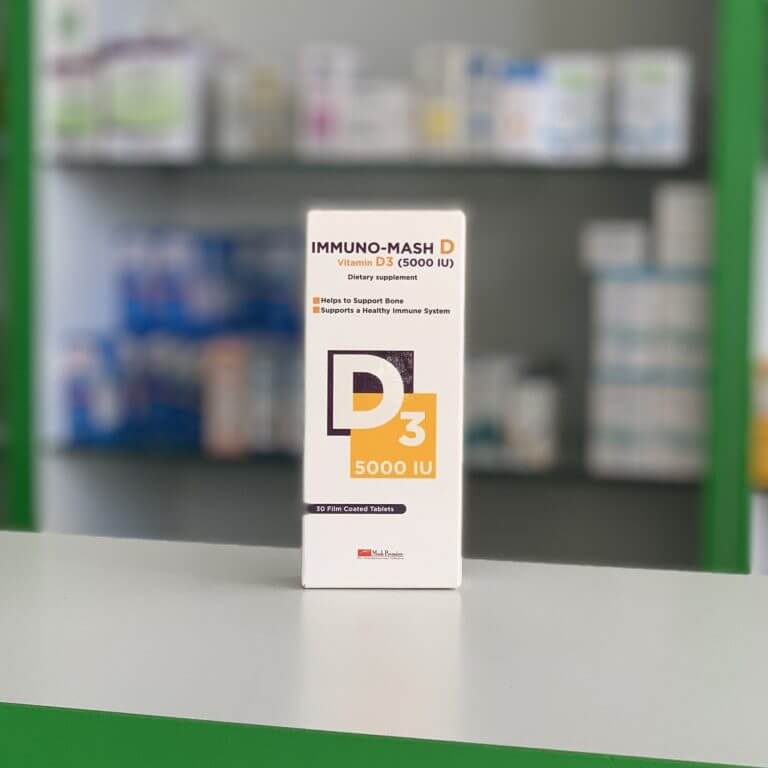
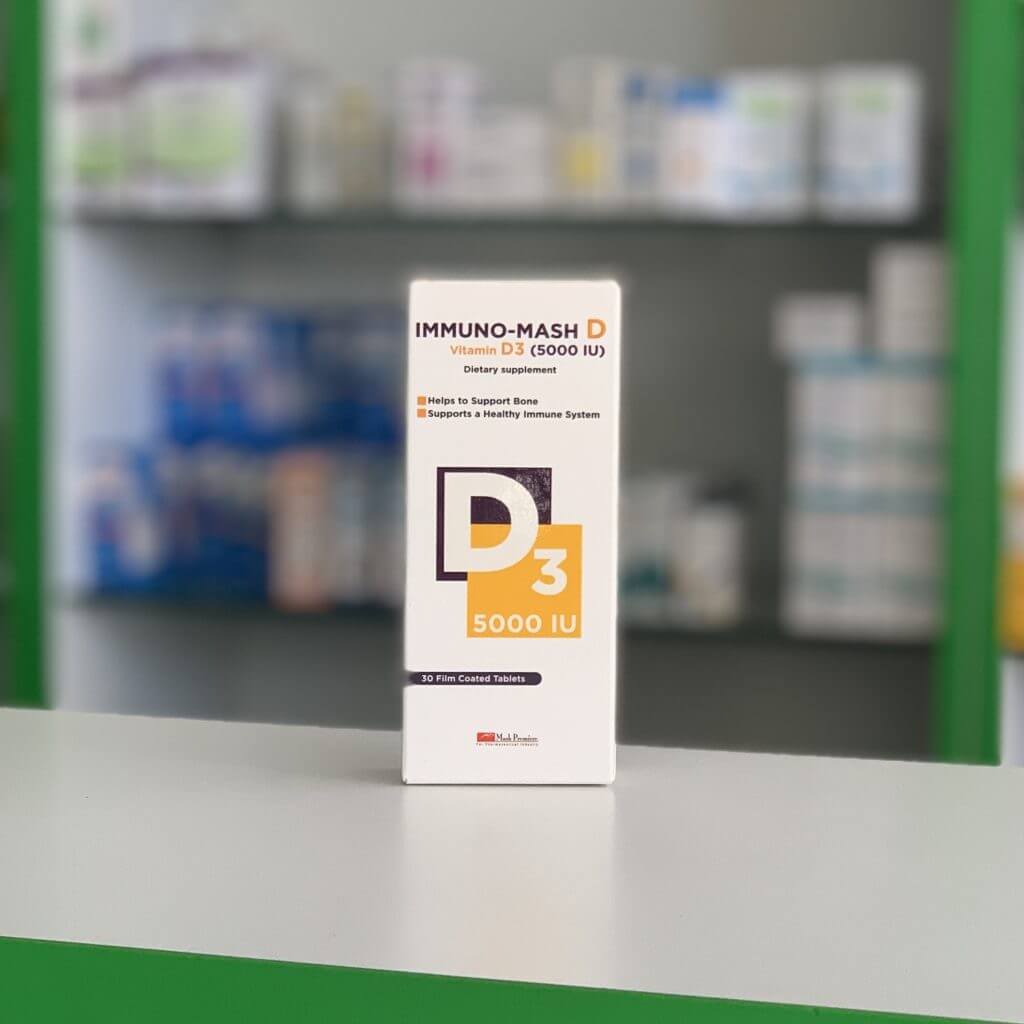
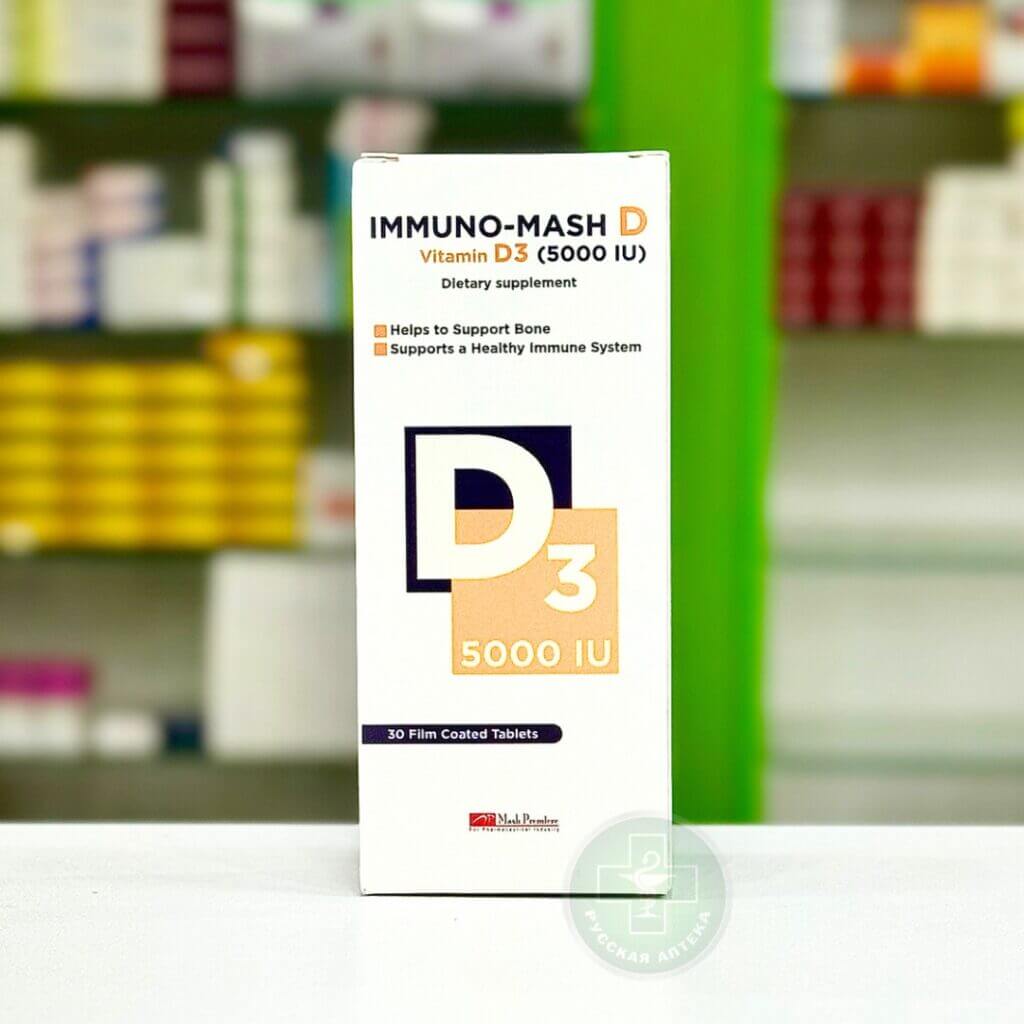
Immuno Mash D3 5000 IU 30 tablets
Composition:
Cholecalciferol — 10 mg;
excipients: microcrystalline cellulose, lactose, sodium croscarmellose, povidone K30, hypromellose, polyethylene glycol 6000, colloidal silicon dioxide, magnesium stearate, titanium dioxide, talc dioxide, green herb.
Product Description:
A remedy for correcting vitamin D3 deficiency.
Participates in the regulation of phosphorus‑calcium metabolism: enhances the absorption of calcium and phosphates in the intestine (due to increased permeability of the cellular and mitochondrial membranes of the intestinal epithelium) and their reabsorption in the renal tubules.
Promotes bone mineralization, the formation of the skeletal system and teeth in children, enhances the ossification process, and is necessary for the normal functioning of the parathyroid glands.
Indications for use:
- Prevention and treatment of rickets;
- prevention of vitamin D3 deficiency in high‑risk groups (malabsorption, chronic diseases of the small intestine, biliary cirrhosis of the liver, condition after resection of the stomach and/or small intestine);
- maintenance therapy for osteoporosis of various origins;
- treatment of osteomalacia (against the background of mineral metabolism disorders in patients over 45 years of age, during prolonged immobilization after injuries, when following a diet excluding milk and dairy products);
- treatment of hypoparathyroidism and pseudohypoparathyroidism.
Method of Administration and Dosage:
For adults — 1 tablet per day with meals, or as recommended by a doctor.
Contraindications:
- hypercalcemia;
- vitamin D3 hypervitaminosis;
- renal osteodystrophy with hyperphosphatemia;
- calcium nephrolithiasis;
- hypersensitivity (including in thyrotoxicosis).
Precautions:
Use with caution in cases of atherosclerosis, heart failure, renal failure, active pulmonary tuberculosis, sarcoidosis or other granulomatosis, hyperphosphatemia, phosphate nephrolithiasis, organic heart diseases, acute and chronic diseases of the liver and kidneys, gastrointestinal diseases, peptic ulcer disease of the stomach and duodenum, hypothyroidism.
For the prevention of vitamin D3 hypovitaminosis, a balanced diet is preferable.
In elderly patients, the need for vitamin D3 may increase due to reduced absorption, decreased ability of the skin to synthesize provitamin D3, reduced time of sun exposure, and increased incidence of renal failure.
Adverse Reactions / Side effects:
Allergic reactions, hypercalcemia, hypercalciuria, decreased appetite, polyuria, constipation, flatulence, nausea, abdominal pain, headache, myalgia, arthralgia, increased blood pressure, arrhythmia, impaired renal function, exacerbation of pulmonary tuberculosis.
Pregnancy and lactation:
Use with caution; medical consultation is required.
Storage conditions:
Store at a temperature not exceeding 30 °C.
Packaging:
A cardboard box containing 1, 2, 3, 5, 6, or 10 strips of 10 tablets each, and a package insert.
 Русский
 English
 عربي
عربي