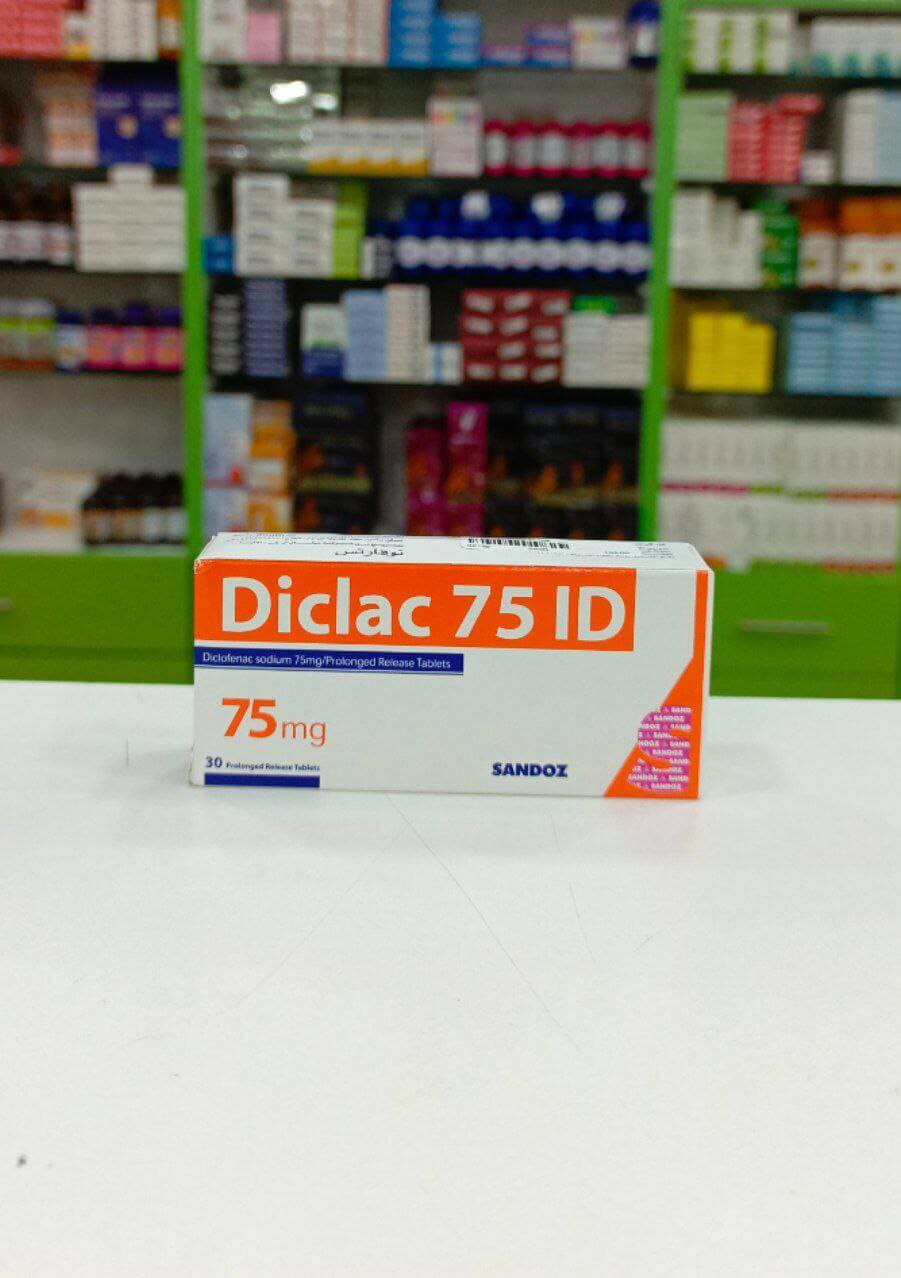
Diclac 75 mg ID 30 tablets
Composition:
Each tablet contains:
Diclofenac sodium — 75 mg.
Excipients:
lactose monohydrate, calcium hydrogen phosphate dihydrate, corn starch, hydroxypropyl methylcellulose, microcrystalline cellulose, sodium starch glycolate, colloidal silicon dioxide, magnesium stearate, red iron oxide (E172).
Product Description:
- Nonsteroidal anti‑inflammatory drug (NSAID), derivative of phenylacetic acid.
- Exhibits strong anti‑inflammatory, analgesic, and moderate antipyretic effects.
- Mechanism: inhibition of cyclooxygenase (COX), reducing prostaglandin synthesis.
- Provides peripheral pain relief (via prostaglandin suppression) and central analgesia (via inhibition in CNS and PNS).
- Inhibits proteoglycan synthesis in cartilage.
- Reduces joint pain, stiffness, and swelling in rheumatic diseases.
- Relieves post‑traumatic and postoperative pain and inflammation.
- Inhibits platelet aggregation; has desensitizing effect with long‑term use.
Indications for Use:
- Joint syndromes: rheumatoid arthritis, osteoarthritis, ankylosing spondylitis, gout.
- Degenerative and chronic inflammatory musculoskeletal diseases (osteochondrosis, periarthropathies).
- Post‑traumatic inflammation of soft tissues and musculoskeletal system (sprains, contusions).
- Back pain, neuralgia, myalgia, arthralgia.
- Pain and inflammation after surgery or trauma.
- Migraine, dysmenorrhea, adnexitis, proctitis.
- Biliary and renal colic.
- Pain in ENT infectious‑inflammatory diseases.
Method of Administration and Dosage:
- Oral use: 1–2 tablets daily.
- Maximum daily dose: 150 mg.
- Tablets should be taken before meals.
Contraindications:
- Active erosive/ulcerative GI lesions.
- Aspirin triad.
- Hematopoietic disorders of unknown origin.
- Hypersensitivity to diclofenac or other NSAIDs.
Precautions:
- Use cautiously in patients with liver, kidney, or GI disease history, dyspepsia, bronchial asthma, hypertension, heart failure, post‑surgery, and elderly patients.
- In cases of allergy to NSAIDs or sulfites, diclofenac should be used only in emergencies.
- Requires monitoring of liver and kidney function and peripheral blood counts during therapy.
Adverse Reactions / Side Effects:
- Gastrointestinal: nausea, vomiting, anorexia, epigastric pain, flatulence, constipation, diarrhea; possible erosive/ulcerative lesions, bleeding, perforation; rare liver dysfunction.
- CNS: dizziness, headache, agitation, insomnia, irritability, fatigue; rare paresthesia, blurred vision, diplopia, tinnitus, seizures, depression.
- Hematologic: rare anemia, leukopenia, thrombocytopenia, agranulocytosis.
- Renal: rare dysfunction, edema in predisposed patients.
- Dermatologic: rare hair loss.
- Allergic: rash, itching, photosensitivity.
Pregnancy and Lactation:
Use only if prescribed by a physician, after benefit/risk assessment.
Storage Conditions:
Store at temperatures not exceeding 30 °C, in a dry place.
Packaging:
Carton box containing 3 blisters of 10 tablets each.
 Русский
 English
 عربي
عربي