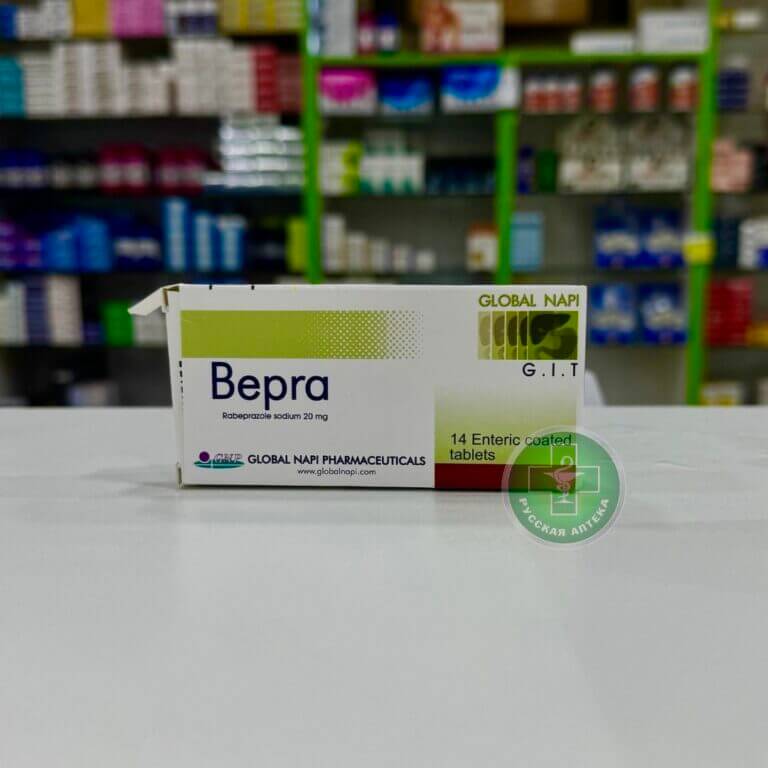
Bepra 20 mg 14 tablets
Composition:
Each tablet contains:
Rabeprazole sodium — 20 mg.
Excipients:
Mannitol, calcium hydroxide, hypromellose, talc, titanium dioxide, ethanol, acetone, purified water.
Properties:
An anti-ulcer agent, inhibitor of H⁺/K⁺-ATPase (proton pump).
The mechanism of action involves inhibition of the H⁺/K⁺-ATPase enzyme in the parietal cells of the stomach, which blocks the final stage of hydrochloric acid production.
This effect is dose-dependent and results in suppression of both basal and stimulated gastric acid secretion regardless of the nature of the stimulus.
Indications:
Peptic ulcer disease of the stomach and duodenum in the active phase.
Peptic ulcer disease associated with Helicobacter pylori infection (in combination with antibiotics).
Gastroesophageal reflux disease (GERD).
Dosage and administration:
The optimal dosing regimen is determined by the physician.
Strict adherence to the prescribed dosage form, indication, and dosing regimen is recommended.
The recommended dose is 20 mg once or twice daily before meals.
Contraindications:
Pregnancy and lactation (breastfeeding).
Hypersensitivity to rabeprazole sodium or substituted benzimidazoles.
Precautions:
Before starting therapy, malignant gastric tumors should be excluded, as rabeprazole may mask symptoms and delay accurate diagnosis.
Dose adjustment is not required in patients with hepatic or renal impairment; however, rabeprazole should be used with caution in patients with severe hepatic impairment.
When co-administered with rabeprazole, dose adjustments of ketoconazole and digoxin may be necessary.
Carcinogenic effects of rabeprazole have not been demonstrated in experimental studies; however, mutagenicity test results are inconclusive. Positive results were observed in lymphoma cell tests in mice, while micronucleus tests in vivo and DNA repair tests in vivo and in vitro were negative.
Adverse reactions:
Gastrointestinal system:
Diarrhea, nausea, abdominal pain, vomiting, flatulence, constipation.
Rarely — dry mouth, dyspepsia, eructation.
Rare isolated cases — anorexia, gastritis, stomatitis, elevated liver enzymes.
Central and peripheral nervous system:
Headache, asthenia, dizziness, insomnia
Rarely — nervousness, somnolence.
Rare isolated cases — depression, visual and taste disturbances.
Respiratory system:
Possible rhinitis, pharyngitis, cough.
Rarely — sinusitis, bronchitis.
Allergic reactions:
Rarely — skin rash.
Rare isolated cases — pruritus.
Other:
Back pain, flu-like syndrome.
Rarely — myalgia, chest pain, chills, calf muscle cramps, urinary tract infections, arthralgia, fever.
Rare isolated cases — weight gain, increased sweating, leukocytosis.
Storage conditions:
Store in a dry, cool place at a temperature not exceeding 30°C.
Packaging:
Cardboard box containing 1 or 2 blisters of 7 tablets each.
 Русский
 English
 عربي
عربي