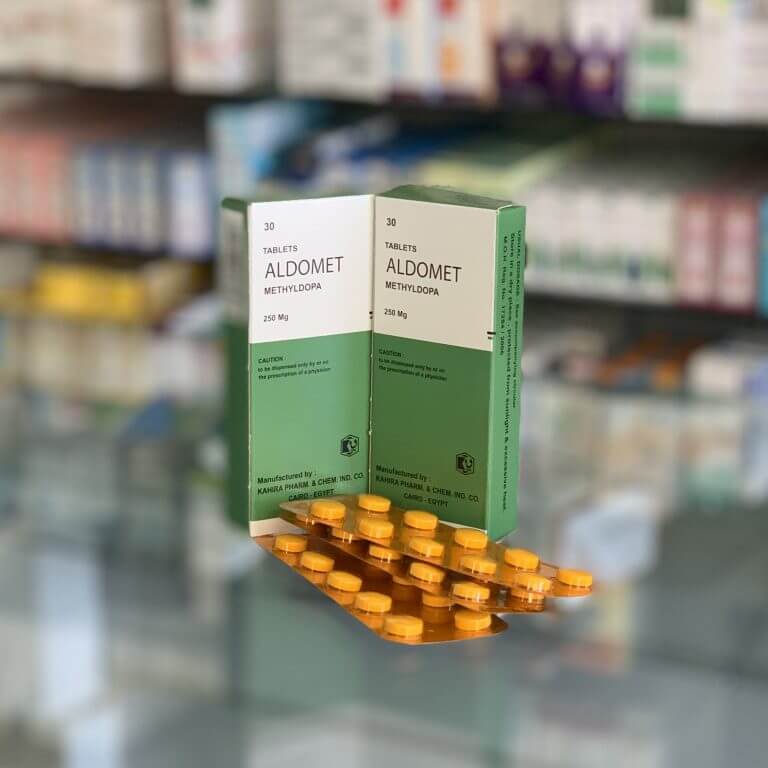
Aldomet 250 mg 30 tablets
Composition:
Methyldopa 250mg
Properties:
Methyldopa is a centrally acting antihypertensive agent. Causes sedation.
Indications:
hypertension (mild, moderate, or severe). Treatment of acute hypertensive crisis can be started with an injection of Aldomet (Methyldopa hydrochloride).
Mode of application:
when administered orally for adults, the initial dose is 250 mg 2-3 times / day. Every 2-3 days, a single dose is increased by 125 mg until the optimal antihypertensive effect is achieved, which is usually observed with a daily dose of 1000 mg (1 g). To reduce the severity of the sedative effect, first increase the evening dose. When a stable hypotensive effect is achieved, the dose is gradually reduced to the minimum effective. In case o impaired renal function, it is necessary to reduce a single dose. For children, the initial dose is 10 mg / kg / day in 2-4 doses. The maximum daily doses: when taken orally for adults – 2000 mg (2 g), for children – 65 mg / kg.
Contraindications:
patients with active liver disease such as acute hepatitis and active cirrhosis. Hypersensitivity (including hepatic disorders associated with previous methyldopa therapy) to any component of these products.
Precautions:
Use with caution in hepatitis, a history of acute left ventricular failure, diencephalic syndrome. In patients with impaired renal function, the daily dose of methyldopa is reduced. When used in elderly and senile patients, the daily dose should be increased strictly gradually, because a sharp decrease in blood pressure is possible. In the course of treatment, it is necessary to monitor liver function and the picture of peripheral blood. The urine of patients receiving methyldopa becomes dark in color. Alcohol consumption is not recommended during the treatment period.
Side effects:
Bradycardia, peripheral edema, redness of the upper half of the body; myocarditis, pericarditis. Dry mouth, nausea, vomiting, diarrhea, liver dysfunction, jaundice.
Drowsiness, lethargy, lethargy, parkinsonism syndrome, staggering while walking, headache, dizziness. Hemolytic anemia, leukopenia, agranulocytosis, thrombocytopenia. Myalgia, arthralgia. Fever, skin rash. Amenorrhea, impotence, decreased libido. Others: nasal congestion.
Pregnancy and lactation:
There have been no adequate and wellcontrolled studies on the safety of methyldopa during pregnancy. Methyldopa crosses the placental barrier. Methyldopa is excreted in breast milk; therefore, if it is necessary to use it during lactation, the ratio of the expected benefits of therapy to the mother and the potential risk to the child should be carefully weighed.
Storage:
Keep out of the reach of children.
 Русский
 English
 عربي
عربي