Русский
 English
 عربي
عربي
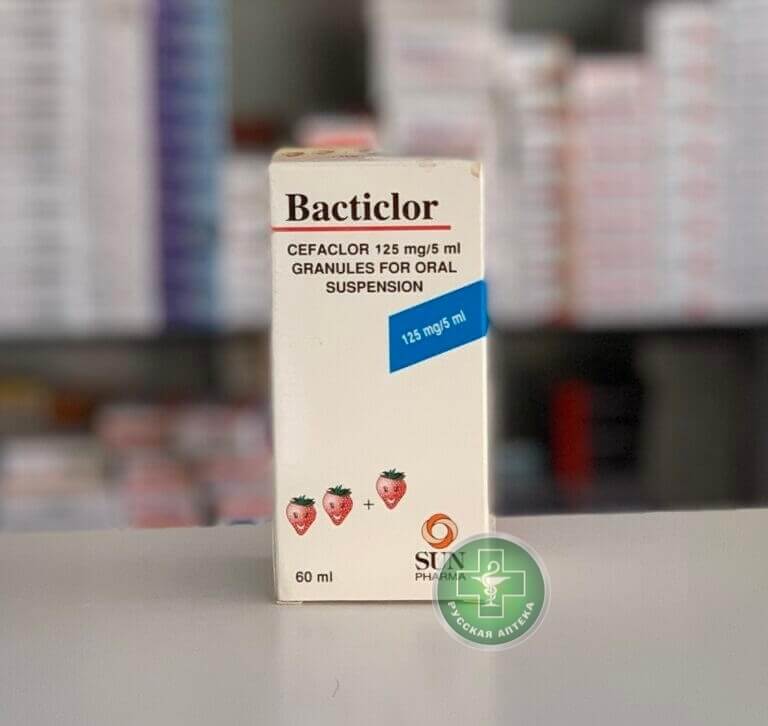
Bacticlor 125 mg/5 ml 60 ml
73£
View analogsBacticlor is indicated for the treatment of the following infections due to susceptible microorganisms:
- Respiratory tract infections, including pneumonia, bronchitis, exacerbations of chronic bronchitis, pharyngitis and tonsillitis, and as part of the management of sinusitis
- Otitis media
- Skin and soft tissue infections
- Urinary tract infections, including pyelonephritis and cystitis
- Bacticlor has been found to be effective in both acute and chronic urinary tract infections.
Buy
Product quantities
Form of Release: Spray
Product Brand:
Pharco Pharmaceuticals Inc.
About the brand


Bacticlor 125 mg/5 ml 60 ml
Composition:
Each 5 ml of reconstituted 125mg/5ml suspension contains:
Cefaclor mononyarare 131.1 mg equivalent to 125 mg of cefaclor base
Inactive ingredients:
Sucrose, Sodium benzoate, Xanthan Gum, Colloidal Anhydrous silica, Allura Red, Strawberry Flavor, Sodium citrate, Citric acid anhydrous, Simethicone emulsion
Properties:
Cefaclor is active against the following organisms in vitro:
Alpha- and beta-haemolytic streptococci,
Staphylococci, including coagulase-positive, coagulase-negative and penicillinase-producing,
Streptococcus pneumonia, Streptococcus pyogenes (group A beta-haemolytic streptococci), Branhamella catarrhalis, Escherichia coli, Proteus mirabilis, Klebsiella species, Haemophilus influenzae, including ampicillin-resistant strains.
Cefacior has no activity against: Pseudomonas species of Acinetobacter species, Methicillin-resistant staphylococci and most strains of enterococci (eg, Str. faecalis) are resistant to cefaclor. Cefaclor is not active against most strains of Enterobacter spp, Serratia spp, Morganella morganii, Proteus Vulgaris and Providencia rettgeri
Indications:
Bacticlor is indicated for the treatment of the following infections due to susceptible microorganisms:
-Respiratory tract infections, including pneumonia, bronchitis, exacerbations of chronic bronchitis, pharyngitis and tonsillitis, and as part of the management of sinusitis
-Otitis media
-Skin and soft tissue infections
-Urinary tract infections, including pyelonephritis and cystitis
-Bacticlor has been found to be effective in both acute and chronic urinary tract infections.
-Cefaclor is generally effective in the eradication of streptococci from the nasopharynx, however, data establishing efficacy in the subsequent prevention of either rheumatic fever or bacterial endocarditis are not available.
Dosage and administration:
-Bacticlor is administered orally.
-The usual recommended daily dosage for children is 20mg/kg/day in divided doses, every eight hours, as indicated.
-For bronchitis and pneumonia, the dosage is 20mg/kg/day in divided doses, administered 3 times daily.
-For otitis media and pharyngitis, the total daily dosage may be divided and administered every 12 hours. Safety and efficacy have not been established for use in infants aged less than one month.
<1 year (9kg): 2.5 ml 3 times / day
1-5 years (9-18kg): 5.0 ml 3 times / day
-In more serious infections, otitis media. sinusitis and infections caused by less susceptible organisms, 40 mg/kg/day in divided doses is recommended, up to a daily maximum of 1g.
-In treatment of beta-haemolytic streptococcal infections therapy should be continued for at least 10 days.
Side effects:
-Gastrointestinal: diarrhea, colitis, nausea and vomiting have also occurred.
-Hypersensitivity: Allergic reactions such as morbilliform eruptions, pruritus, urticaria
Anaphylactoid events may present as solitary symptoms, , including angioedema, asthenia, oedema (includingface and limbs), dyspnoea, paraesthesias, syncope, or vasodilatation.
Rarely, hypersensitivity symptoms may persist for several months.
-Hematological: Eosinophilia, positive Coombs’ tests, thrombocytopenia. Transient lymphocytosis, leukopenia and rarely, haemolytic anemia, aplastic anemia, agranulocytosis and reversible neutropenia or possible clinical significance.
Rarely: Reversible interstitial nephritis
-Central nervous system: Reversible hyperactivity, agitation, dizziness, hallucinations, somnolence
-Miscellaneous: Genital pruritus, vaginitis and vaginal moniliasis
Contraindications:
-Hypersensitivity to cephalosporins.
-Hypersensitivity to the active substance,to other cephalosporin or to any of the excipients
-Previous immediate and/or severe hypersensitivity reaction to penicillin or to any other beta-lactam medicinal products.
Warnings and precautions:
- Cefaclor should be given cautiously to penicillin-sensitive patients.
- Pseudomembranous colitis has been reported with virtually all broad-spectrum antibiotics including macrolides, appropriate agents. cephalosporins. It is important, therefore, to consider its diagnosis in patients with semi-synthetic penicillins and who develop diarrhea in association with the use of antibiotics. Such colitis may range in severity from mild to life-threatening. Mild cases usually respond to drug discontinuance alone. In moderate to severe cases appropriate measures should be taken.
- Cefaclor should be administered with caution in the presence of markedly impaired renal function.
- Prolonged use of cefaclor may result in the overgrowth of non-susceptible organisms. If superinfection occurs during therapy, appropriate measures should be taken.
Positive direct Coombs’ tests have been reported during treatment with the cephalosporin antibiotics. A false-positive reaction for glucose in the urine may occur with Benedict’s or Fehling’s solutions or with copper sulfate test tablets.
- Drug interactions:
There have been rare reports of increased prothrombin time, with or without clinical bleeding, in patients receiving cefaclor and warfarin concomitantly. It is recommended that in such patients, regular monitoring ofprothrombin time should be considered, with adjustment of dosage if necessary.
The renal excretion of cefaclor is inhibited by probenecid.
- Pregnancy and lactation:
Caution should be exercised prescribing for pregnant women and nursing mothers.
- Effects on ability to drive and use machines:
Not applicable.
- If you have been told by your doctor that you have intolerance of some sugars, contact your doctor before taking this medicinal product.
Storage:
Store at the temperature not exceeding 30°C, in the original bottle.
Package:
Carton box holds a bottle of 60 ml and an insert leaflet.
Tags, Keywords:
Active Ingredients:
No comments yet. Be the first to write one.
Your comment will be published after moderation.
You’ll receive a notification to your email when someone replies.