 Русский
 English
 عربي
عربي
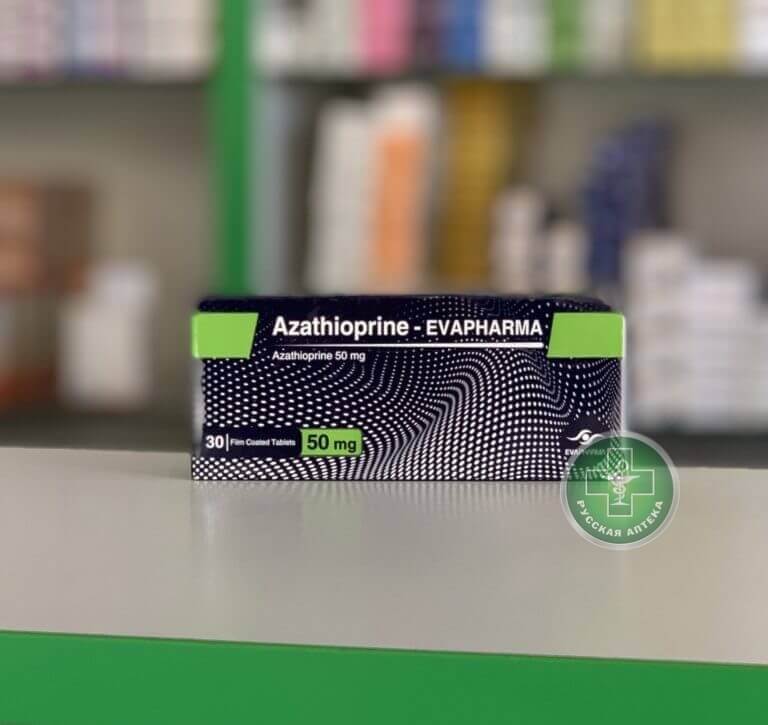
Azathioprine 50 mg 30 tablets
96£
View analogs- To prevent the body from rejecting kidney, liver or heart transplants;
- Inflammatory bowel disease (Crohn’s disease or ulcerative colitis);
- Severe inflammatory disease of the joints (rheumatoid arthritis);
- Long−term inflammation of skin and/or intestines (systemic lupus erythematosus);
- Inflammation of the skin and muscles (dermatomyositis, polymyositis);
- Inflammation of the liver (hepatitis);
- Inflammation of the walls of the arteries (polyarteritis nodosa);
Buy
Product quantities
Form of Release: Tablets
Product Brand:
Eva Pharma
About the brand
Product Categories: Autoimmune • Immunosuppressants


Azathioprine 50 mg 30 tablets
Composition:
Azathioprine 50 mg
Inactive ingredients:
Lactose monohydrate, maize starch, povidone, colloidal silicon dioxide, magnesium stearate, hypromellose, microcrystalline cellulose, polyoxyl−8−stearate, talc and titanium dioxide (E171).
Properties:
Azathioprine belongs to a group of medicines called immunosuppressants. These work by reducing the strength of the body’s immune system. Azathioprine may be taken long-term as it can take weeks or months before an effect is seen.
Indications:
- To prevent the body from rejecting kidney, liver or heart transplants;
- Inflammatory bowel disease (Crohn’s disease or ulcerative colitis);
- Severe inflammatory disease of the joints (rheumatoid arthritis);
- Long−term inflammation of skin and/or intestines (systemic lupus erythematosus);
- Inflammation of the skin and muscles (dermatomyositis, polymyositis);
- Inflammation of the liver (hepatitis);
- Inflammation of the walls of the arteries (polyarteritis nodosa);
- Increased breakdown of red blood cells due to the presence of auto-antibodies active at body temperature (warm) causing anemia (looking pale and feeling tired);
- Autoimmune disorder where the number of platelets circulating is reduced by the immune system destroying them, causing a rash and an increased tendency to bleed, persisting longer than 6 months without a specific cause and is not responsive to conventional treatment (chronic refractory idiopathic thrombocytopenic purpura);
- Blistering of the skin (pemphigus vulgaris).
Directions for use:
Always take this medicine exactly as your doctor has told you.
- Azathioprine may be taken with food or on an empty stomach.
- Azathioprine should be taken 1 hour before or 2 hours after milk or dairy products.
-Adults:
You should be adequately monitored throughout the duration of treatment. Particular care should be
taken to monitor your response and to reduce the maintenance dose to the lowest dose possible.
Organ transplants:
- An initial dose of up to 5 mg per kg of bodyweight per day may be given.
- The maintenance dose should range from 1−4 mg per kg of bodyweight per day.
- Treatment with Azathioprine should be maintained indefinitely, even if only low doses are necessary, because of the risk of rejection.
Other conditions:
- The starting dose is 1−3 mg per kg of bodyweight per day and should be adjusted (within these limits) according to the effectiveness of treatment (which may be evident only after weeks or months).
- The maintenance dose should be reduced to the lowest dose possible. If no improvement occurs within 3 months, consideration should be given to withdrawing this medicine.
However, for patients with inflammatory bowel disease, a treatment duration of at least 12 months should be considered as a response to treatment may not be apparent until after 3-4 months of treatment.
- Kidney and/or liver disorders:
If you suffer from kidney and/or mild to moderate liver disorders, the dose should be given at the lower end of the normal range.
- If you have (inherited) little or no TPMT(thiopurine S-methyltransferase) activity (metabolic abnormality that increases the risk of adverse drug effects if you are treated with thiopurine medicines), you are at increased risk of severe toxicity from conventional doses of Azathioprine and generally will require substantial dose reduction.
- Most patients with heterozygous TPMT deficiency (intermediate TPMT enzyme activity) can tolerate recommended Azathioprine doses, but some may require dose reduction.
- NUDT15 gene mutation:
If you have an inherited mutation in the NUDT15 gene (a gene which is involved in the break-down of Azathioprine in the body), you are at increased risk of severe toxicity and generally will require dose reduction.
- Elderly:
It is advisable to monitor kidney and liver function and to consider reducing the dose if there is impairment.
- Use in children:
The recommended doses are the same as those given for adults.
Children considered to be overweight may require doses at the higher end of the range and therefore close monitoring of response to treatment is recommended.
- If you accidentally take too many tablets, contact your doctor or nearest hospital emergency department immediately for advice. Remember to take this leaflet or any remaining tablets with you.
- If you forget to take Azathioprine
Take it as soon as you remember, unless it is time for your next dose. If you miss a dose do not take a double dose to make up for a forgotten dose.
Side effects:
Seek medical advice immediately if you develop the following symptoms:
- Allergic reactions: swelling of the face, throat or tongue, difficulty breathing or dizziness;
- Severe blistering of the skin (toxic epidermal necrolysis), mouth, eyes and genitals (Stevens-Johnson syndrome);
- Various types of cancers including blood, lymph and skin cancers;
Common:
- A reduction in blood platelets, which increases risk of bleeding or bruising (thrombocytopenia);
- Feeling sick (nausea). This may be relieved by taking the tablets after meals
Uncommon:
- Allergic reactions. The signs may include: o swelling of the eyelids, face or lips, o redness of the skin, skin nodules or a skin rash (including blisters, itching or peeling skin);
- Viral, fungal and bacterial infections in other patient populations;
- Looking pale and feeling tired (anemia);
- Inflammation of the pancreas (pancreatitis)
- Build-up of bile acids in the bloodstream causing persistent itch (cholestasis) and worsening of liver function tests (usually reversible on withdrawal of treatment);
Rare:
- Various types of cancers including soft tissue (sarcomas), uterine and cervical;
- Life-threatening liver damage
- Hair loss (alopecia)
- Blood and bone marrow disorders
Very rare:
- Virus-associated PML following the use of Azathioprine in combination with other immunosuppressants;
- Inflammation of the lungs (reversible pneumonitis);
- Inflammation which causes abdominal pain or diarrhea (colitis/diverticulitis);
- Bowel perforation if you are a transplant patient;
- Severe diarrhea if you suffer from inflammatory bowel disease;
Contraindications:
Do not take Azathioprine if:
- You are allergic to Azathioprine, 6−mercaptopurine (a derivative of Azathioprine) or any of the other ingredients of this medicine.
- You are breastfeeding, pregnant, trying to become pregnant or think you may be pregnant.
Warnings and precautions:
Talk to your doctor before taking Azathioprine:
- If you are going to have a vaccination;
- If you are currently taking ribavirin;
- If you suffer from kidney or liver problems;
- If you have had Hepatitis B, a liver disease caused by a virus;
- If you suffer from Lesch−Nyhan Syndrome, a rare hereditary disorder caused by a deficiency of the enzyme HPRT ( hypoxanthine- guanine- phosphoribosyltransferase)
- If you have, have been exposed to or have ever suffered from chickenpox or shingles (varicella zoster virus infection) as the infection can become severe if you are taking immunosuppressants;
- If you are showing signs or symptoms (headache, loss of coordination, clumsiness, loss of speech, memory loss, vision problems, weakness of the legs and arms that gets worse) of having Progressive Multifocal Leukoencephalopathy (PML- a rare infection caused by a virus that damages the material covering and protecting nerves in the brain) as treatment with Azathioprine should be withheld;
- If you have an inherited mutation in the NUDT15 gene (a gene which is involved in the break-down of Azathioprine in the body);
- If you suffer from an inherited condition where your body produces too little of the enzyme thiopurine methyltransferase (TPMT);
- If you or your partner are pregnant or planning to become pregnant;
- If you are receiving immunosuppressive therapy, taking Azathioprine could put you at greater risk of: tumors, including skin cancer. Therefore, avoid excessive exposure to sunlight and UV light, wear protective clothing and use a sunscreen with a high protection factor;
- If you are receiving treatment with multiple immunosuppressants (including thiopurines) as this may increase the risk of a type of cancer called lymphoproliferative disorder and disorders of the lymph system due to a viral infection (Epstein-Barr virus (EBV)-associated lymphoproliferative disorders);
- If you suffer with autoimmune conditions such as inflammatory bowel disease (IBD), as this could put you at greater risk of developing a life-threatening disorder called Macrophage Activation Syndrome (excessive activation of white blood cells associated with inflammation);
- Other medicines and Azathioprine:
Tell your doctor or pharmacist if you are taking, have recently taken or might take any other medicines, including those obtained without a prescription. This includes herbal medicines.
Medicines which may interact with or be affected by Azathioprine:
– Before a surgical procedure tell the anaesthesiologist that you are taking azathioprine because muscle relaxants used during anesthesia may interact with Azathioprine ;
– Medicines used to treat gout such as allopurinol, oxipurinol, thiopurine or other xanthine oxidase inhibitors, such as febuxostat. If these medicines are given concomitantly with Azathioprine, the dose of Azathioprine must be reduced to a quarter of the original dose;
– Muscle relaxants such as atracurium, rocuronium, cisatracurium, pancuronium or suxamethonium (also known as succinylcholine) and tubocurarine (neuromuscular blocking agents);
– Medicines used to treat chronic inflammatory bowel diseases such as olsalazine, mesalazine, sulfasalazine (aminosalicylate derivatives) as lower doses of Azathioprine may need to be considered when given concomitantly;
– Medicines used to thin the blood such as warfarin, acenocoumarol (anti−coagulants);
– Medicines used to treat high blood pressure or heart failure e.g. captopril
(Angiotensin−Converting Enzyme [ACE] Inhibitors);
– Medicines used to treat infections such as trimethoprim, sulfamethoxazole also known as co-trimoxazole (antibiotics);
– Medicines used to treat stomach ulcers such as cimetidine (H2-receptor antagonist);
– Medicines used to treat certain rheumatic disorders such as indomethacin (Non-Steroidal Anti−Inflammatory Drugs [NSAIDs]);
– Cytostatic medicines (used to treat cancer);
– Medicines which may have a myelosuppressive effect (decrease in bone marrow activity resulting in fewer red and white blood cells and platelets) such as penicillamine (mainly used in the treatment of rheumatoid arthritis);
– Live vaccines and also inactive vaccines such as hepatitis B;
– Ribavirin, used to treat chronic hepatitis C;
– Methotrexate, used to treat auto-immune conditions and cancers;
– Infliximab, mainly used in the treatment of ulcerative colitis and Crohn’s disease.
- If you are pregnant or breast−feeding, think you may be pregnant or are planning to have a baby, ask your doctor for advice before taking this medicine.
- Women of childbearing potential should use effective contraceptive measures while being treated with Azathioprine and for one month following completion of treatment.
- Men should use effective contraceptive measures while being treated with
Azathioprine and for three months following completion of treatment.
- If you experience any side effects because of this medicine, you may not be able to drive or operate machinery.
- Azathioprine contains lactose
If you have been told by your doctor that you have an intolerance to some sugars, contact your doctor before taking this medicine.
- Keep this medicine out of the sight and reach of children.
Storage:
Store at a temperature not exceeding 25°C. Protect from light.
Package:
Carton box holds 3 strips each of 10 tablets, and paper instructions.
Tags, Keywords:
Active Ingredients:
No comments yet. Be the first to write one.
Your comment will be published after moderation.
You’ll receive a notification to your email when someone replies.


